Table of contents
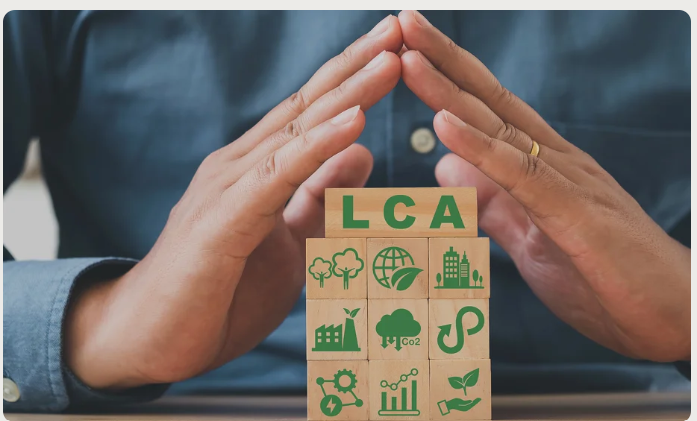
Aluminium products can last for centuries. We recycle, and recycle again—and the cycle continues indefinitely. When evaluating the environmental impact of aluminium products, recyclability is a crucial factor in documenting the life cycle of both processes and products. However, it is only one part of the bigger picture, as a Life Cycle Assessment (LCA) examines many more aspects.
When selecting materials for your product and assessing their environmental impact, you should request a Life Cycle Assessment (LCA) from your supplier. These assessments help you identify the most sustainable solutions for your design and provide scientific evidence to support decision-making.
1. What Is LCA?
LCA stands for Life Cycle Assessment—also known as Life Cycle Analysis. The two terms can be used interchangeably.
An LCA is a scientific and standardized methodology used to quantify the direct and indirect environmental impacts of a product or manufacturing process throughout its entire life cycle—from raw material extraction to end-of-life. LCA can also be used to support improvement initiatives that enhance the environmental performance of products.
In recent years, LCA has become an essential tool in corporate decision-making. Its reliability, consistency, and transparency—ensured through systematic documentation—are the key reasons why we conduct LCA for our products and production processes.
LCA Is Becoming Widely Adopted Across Industries
Today, the automotive industry is leading in LCA implementation, followed by the construction and building materials sectors.
Originally developed by researchers, LCA has evolved significantly, particularly over the last 6–7 years, as the European Commission has sought to create a more complete picture of climate impacts.
As sustainability and carbon neutrality become top business priorities, LCA is now widely applied and recognized as the most reliable and widely accepted method for communicating product or corporate environmental performance.
LCAs are governed by two international standards: ISO 14040 and ISO 14044. However, these standards (last updated in 2006) no longer fully meet modern communication and disclosure needs. They are also flexible enough to allow different interpretations across industries, which can lead to inconsistent results.
To address this challenge, the European Commission has spent the past decade developing a unified methodology known as the Product Environmental Footprint (PEF).
Cradle-to-Grave Impacts in LCA
What key components are included and documented in an LCA? As mentioned earlier, recyclability is one of them.
For aluminium products, our LCAs often evaluate cradle-to-grave impacts. The more detail required, the more comprehensive the analysis must be. Related assessments, such as Environmental Product Declarations (EPDs), are also useful for comparing products.
2. Stages of an LCA
A typical Life Cycle Assessment includes the following stages:
Raw material extraction
Product manufacturing
Distribution
Use phase
End-of-life disposal or recycling
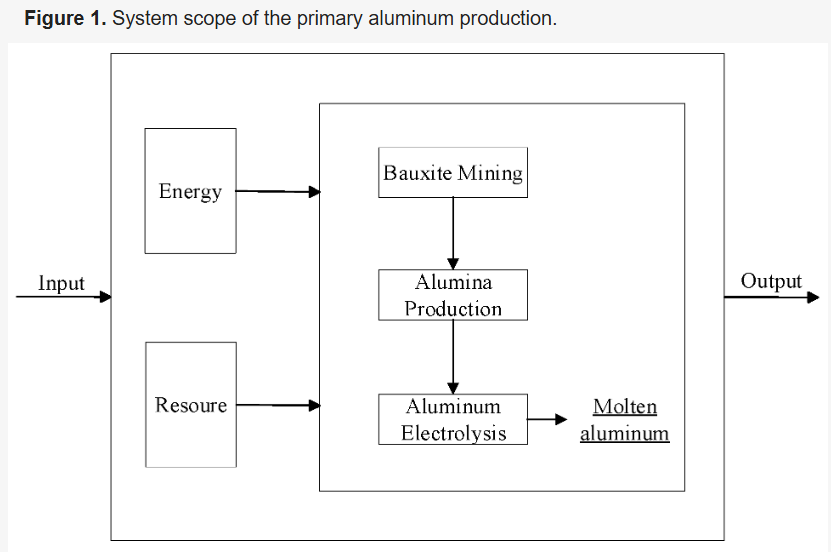
3. Aluminium Life Cycle
In this process, we evaluate the full life cycle of aluminium—including low-carbon aluminium products—as well as key production steps such as extrusion, machining, and anodizing. This allows us to identify and optimize environmental impacts at each stage of the value chain.
For example: For average global aluminium, the contribution of downstream processing is relatively small compared to the total carbon footprint.
The average carbon footprint of extrusion in Europe is 0.68 kg CO₂e/kg Al.
Meanwhile, the primary aluminium billet has a footprint of 8.6 kg CO₂e/kg Al. → This means extrusion accounts for only about 7% of the total impact.
However, when using low-carbon aluminium, the picture changes.
For example: With Hydro CIRCAL aluminium (2.3 kg CO₂e/kg Al), extrusion alone accounts for nearly 25% of total emissions—no longer a minor factor.
The same applies to machining and surface treatment processes—an important point to note.
Low-carbon aluminium products are becoming increasingly common, and their potential is enormous—and entirely justified.
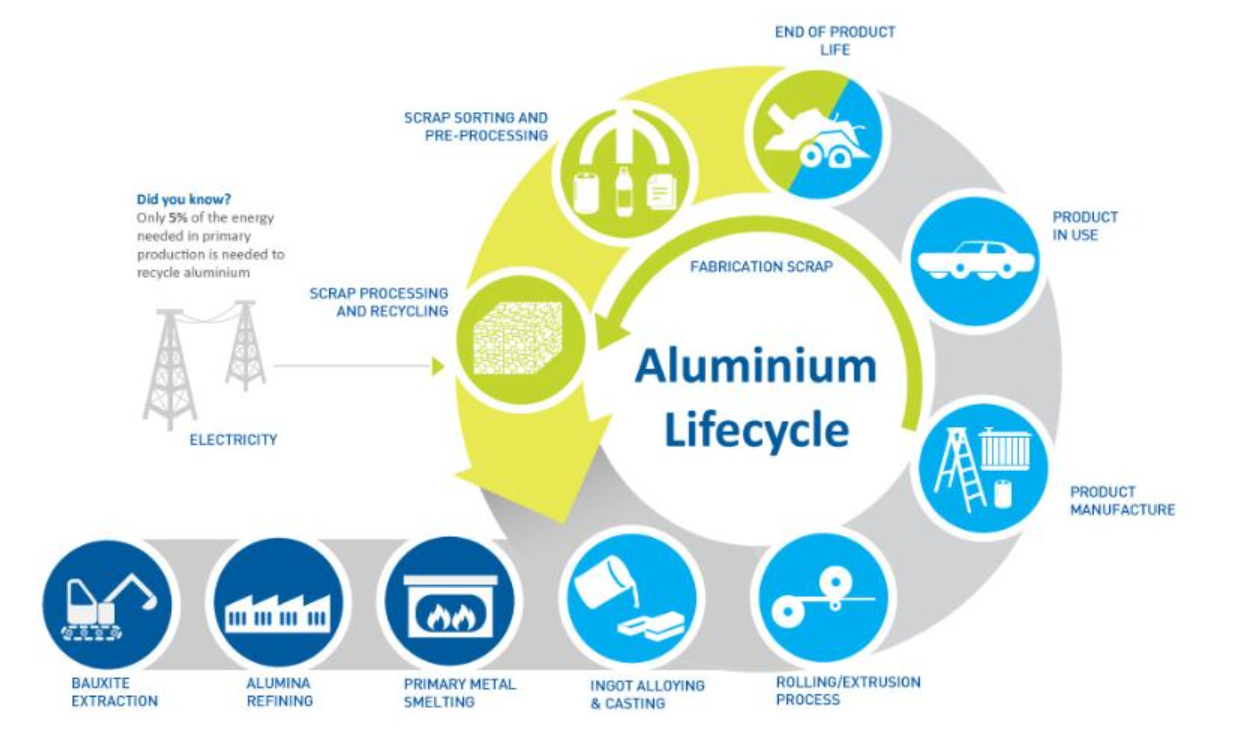 3.1. Bauxite Mining
Bauxite, the ore containing aluminium, is typically found in open-pit mines in tropical regions. Aluminium is the third most abundant element in the Earth’s crust.
3.2. Alumina Refining (Al₂O₃)
After extraction, bauxite is refined into alumina—a white powder that is essentially aluminium oxide (Al₂O₃). Refineries are typically located close to bauxite mines for efficient logistics.
3.3. Primary Aluminium Smelting
Primary aluminium production is highly energy-intensive. In this process, aluminium is separated from alumina. Primary aluminium has a purity of approximately 99.5% and is used as feedstock for various manufacturing processes.
3.4. Alloying and Billet Casting
Primary metal is alloyed and cast into rolled slabs or extrusion billets in a foundry, usually located near smelters or rolling/extrusion mills.
3.5. Rolling or Extrusion
Rolled slabs are processed into specific thicknesses and widths, then heat-treated to achieve required technical properties. Extrusion billets are pressed through dies to create various shapes and profiles.
3.6. Product Manufacturing
Manufacturers use rolled sheet, plate, or extruded profiles to produce specific products—such as ladders, tankers, beverage cans, aluminium packaging, and more.
3.7. Product Use Phase
Aluminium-containing products remain in use for varying durations—from less than 60 days for beverage cans to more than 50 years for construction materials.
3.8. End of Life
After their use phase, products reach end-of-life and are sent for recycling.
3.9. Scrap Sorting and Processing
Aluminium is recovered from discarded products through mechanical separation techniques such as shredding, eddy current separation, air knives, and others.
3.10. Scrap Treatment and Recycling
Scrap is further processed to remove contaminants, then melted using appropriate technologies. Recycled aluminium is nearly equivalent to primary metal and retains valuable alloying elements such as manganese, magnesium, copper, silicon, and chromium.
Beyond Carbon: Other Environmental Impacts in LCA
LCA provides many critical insights for minimizing environmental impact. It also evaluates additional potential impacts, including:
Acidification
Eutrophication
Resource depletion
In total, an LCA can evaluate around 16 environmental indicators.
If a company focuses only on climate change, it may make misguided decisions that increase impacts in other categories—this is known as pollution transfer, and LCA professionals must pay close attention to it.
LCA Beyond the Environment
Life cycle thinking can also be applied to other pillars of sustainability—social and economic—through tools such as:
Social Life Cycle Assessment (S-LCA)
Life Cycle Costing (LCC)
When all three are assessed together, the result is Life Cycle Sustainability Assessment (LCSA), which aims to develop products that respect all three dimensions: environmental, social, and economic.
In Summary
We must adopt a holistic perspective—not just focus on climate or the environment. A complete picture benefits you, me, and our shared future.