Table of contents
1. What is Higg FEM?
For textile and garment businesses, the Higg Index is no longer an unfamiliar standard. Developed by the Sustainable Apparel Coalition (SAC), the Higg Index is a global suite of standardized tools aimed at helping companies in the fashion, footwear, and consumer goods industries measure, evaluate, and improve their sustainability performance across environmental, social, and labor dimensions throughout the supply chain.

Higg FEM (Facility Environmental Module) is a tool within the Higg Index suite, specifically designed to assess and improve the environmental performance of production facilities in the fashion and consumer goods industries. The latest version, Higg FEM 4.0, has been updated to enhance data quality and verification processes. This tool supports businesses in monitoring critical aspects such as energy management, greenhouse gas emissions, water and chemical management, while facilitating strategic environmental decision-making.

2. The Value of Higg FEM
Sustainable economic development is recognized as a global issue, with countries placing significant importance on linking economic growth to environmental protection, especially in the apparel industry—one of the sectors with the largest waste generation. Currently, to meet the demands of major markets such as the EU and the US regarding sustainable product standards for imports, Higg FEM has become a benchmark for evaluating and improving environmental aspects such as energy management, greenhouse gas emissions, and the use of water and chemicals. This helps meet the expectations of international customers and the legal requirements of these markets. Therefore, HIGG FEM is increasingly becoming a critical foundation for textile businesses seeking to penetrate large markets.
3. Target Audience for HIGG FEM
3.1. Manufacturers and Contractors
Textile, Dyeing, and Finishing Factories: Assessing energy consumption, water use, and chemical emissions.
Apparel and Footwear Factories: Evaluating environmental performance related to production processes and waste management.
3.2. Brands and Retailers
Major brands use Higg FEM to assess the environmental performance of facilities within their supply chains to ensure that their products are produced sustainably and comply with international environmental standards.
3.3. Service Providers and Supply Chain Partners
Entities such as raw material or accessory suppliers can also use Higg FEM to improve and demonstrate their environmental performance, thus meeting the requirements of brands and retailers.
4. Key Areas Evaluated by HIGG FEM in Environmental Performance
Higg FEM evaluates the environmental performance of production facilities across several areas, focusing on key aspects to improve sustainability. The specific areas include:
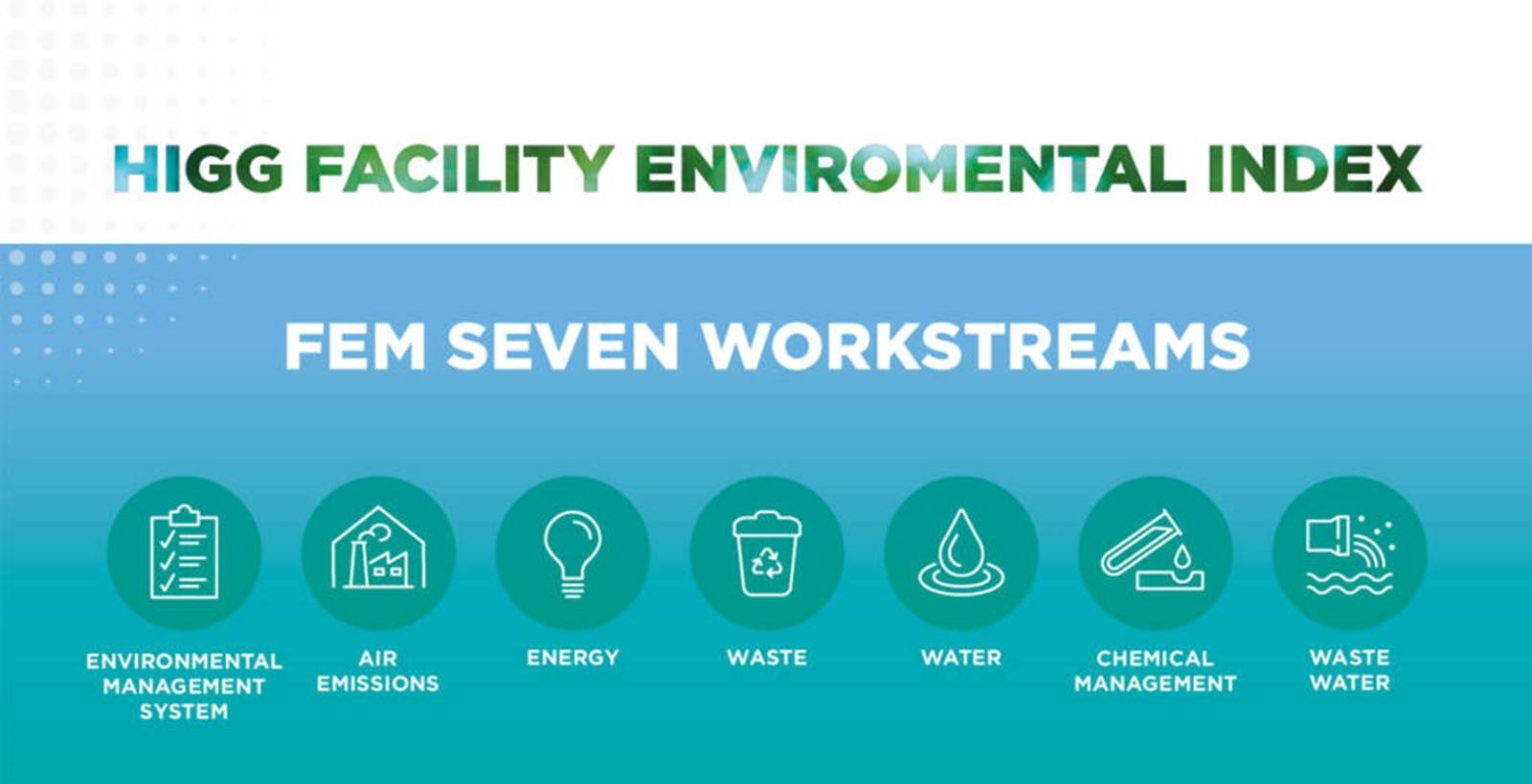
Key Areas Evaluated by HIGG FEM in Environmental Performance
Higg FEM evaluates the environmental performance of production facilities across several areas, focusing on key aspects to improve sustainability. The specific areas include:
4.1. Environmental Management Systems
Assesses the overall environmental management measures of the facility, including policies and processes related to sustainability.
Evaluates the facility's ability to meet international environmental standards.
4.2. Air Emissions Management
Evaluates sources of air emissions other than greenhouse gases, such as VOCs (volatile organic compounds) and dust.
Focuses on controlling and minimizing the impact from these sources.
4.3. Energy Management
Evaluates energy consumption (electricity, fuel) and greenhouse gas emissions related to production activities.
Identifies opportunities for energy savings and emission reductions.
4.4. Waste Management
Assesses the amount of waste generated during production.
Examines waste reduction, recycling, and efficient disposal measures.
4.5. Water Management
Manages water intake: Monitors and reduces water usage.
Implements water-saving measures: Applies technology or processes that consume less water.
Manages water supply risks (e.g., drought, water resource depletion).
4.6. Chemical Management
Evaluates the use and management of chemicals, including storage, handling, and disposal.
Ensures compliance with regulations concerning hazardous chemicals.
4.7. Wastewater Management
Manages wastewater quality: Ensures treated wastewater meets standards before being released into the environment.
Wastewater treatment technologies: Uses effective systems to remove contaminants (chemicals, heavy metals, microorganisms, etc.).
Monitors discharge: Tracks flow and quality of wastewater to ensure compliance with legal regulations.
5. Scoring Principles of HIGG FEM
The scoring principles of Higg FEM are based on evaluating the environmental performance of production facilities through specific areas. The score is calculated based on the completion level and the effectiveness of the measures implemented by the facility.
Here are the key principles:
5.1. Tiered Questionnaire System
Higg FEM uses a tiered questionnaire system with three levels of evaluation:
Level 1: Focuses on basic requirements, including legal compliance and establishing an environmental management system.
Level 2: Assesses improvement measures such as optimizing energy, water, and chemical performance.
Level 3: Encourages advanced practices such as innovation and best practices in environmental management.
5.2. Performance-Based Scoring
Scores are awarded based on the level of completion and effectiveness of the measures applied.Each area (energy, water, waste, chemicals, air emissions) has its own weight, contributing to the final score.
5.3. Transparency and Data Verification
Facilities may conduct self-assessments, but for the score to be officially recognized, third-party verification is required.Verification ensures the accuracy and transparency of data, enhancing the credibility of the Higg FEM score.
5.4. Comparison and Continuous Improvement
Companies can use their scores to compare performance over time or with other facilities.The scores not only reflect the current state but also drive goal setting and continuous improvement.These scores help businesses identify areas for improvement, thereby enhancing environmental performance and meeting international market demands.
6. The Current Situation of Vietnamese Enterprises
The implementation of Higg FEM in Vietnamese textile businesses presents several challenges and opportunities:
6.1. Challenges
Strict Requirements: Higg FEM standards apply more stringent international regulations than local Vietnamese laws, making it difficult for businesses that lack the capacity or experience in environmental management. This is particularly challenging for those who only meet basic certifications such as ISO 14001.
Differences in Brand Requirements: International brands often have their own specific requirements, creating pressure for businesses to balance Higg FEM standards with customer-specific demands.
6.2. Benefits and Opportunities
Improving Resource Efficiency: Higg FEM helps businesses identify and reduce resource waste, such as energy and water consumption, while also reducing emissions and operational costs.
Enhancing Reputation and Competitiveness: Businesses that achieve high Higg FEM scores will have better access to stricter markets, improving brand reputation and opportunities for international partnerships.
Supporting Sustainable Development: The tool promotes sustainable development, helping businesses position themselves as "green" leaders in the industry.
In summary, while adopting Higg FEM presents challenges for Vietnamese enterprises, it also provides an opportunity to enhance operational efficiency and gain a competitive edge in the international market.
7. How Do Businesses Verify Their HIGG FEM Self-Assessment Reports?
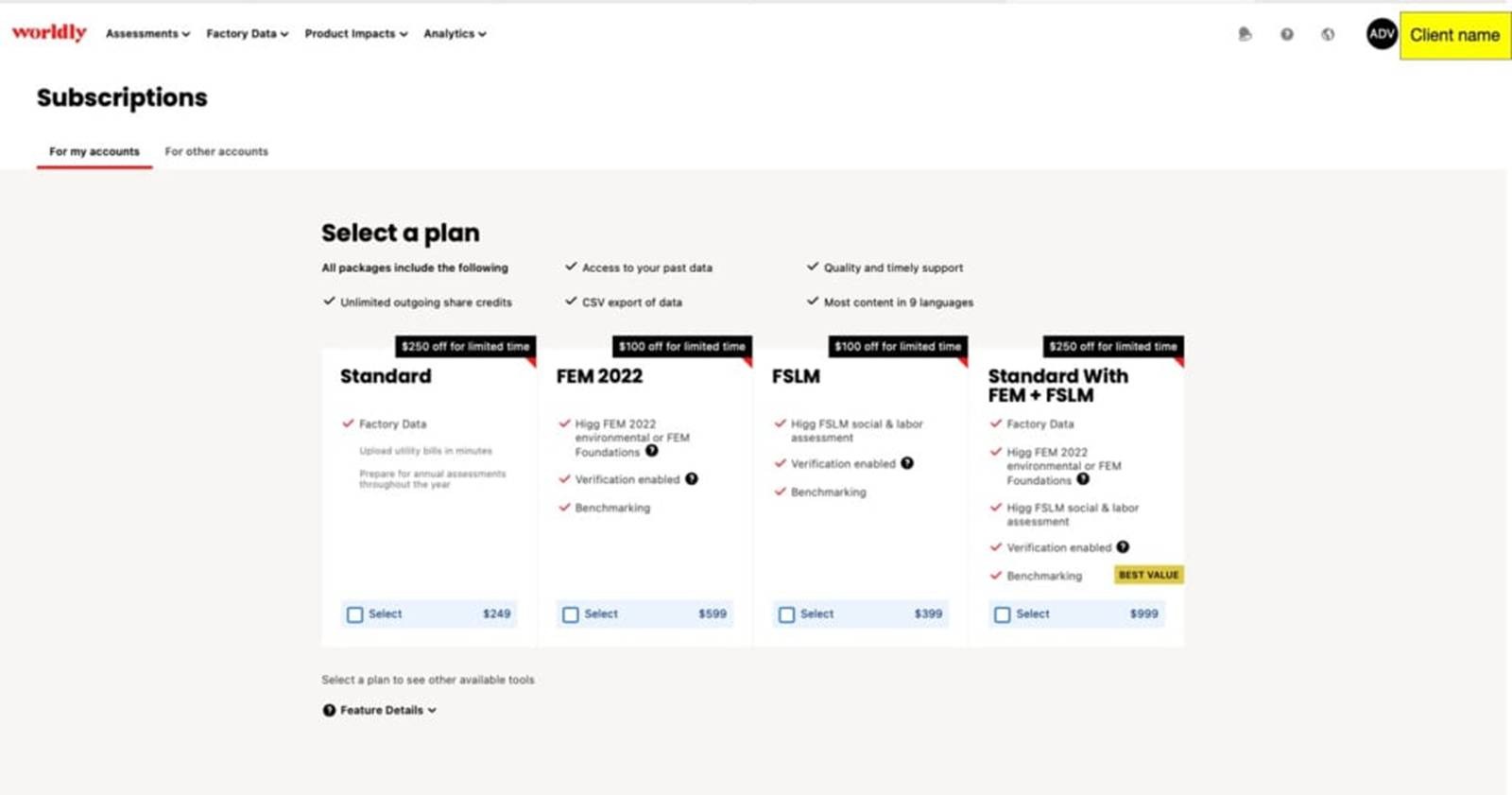
The HIGG FEM module includes an electronic verification questionnaire to assess the environmental compliance of a business. Companies are required to answer the questions and upload the results to the Higg system on worldly.io. Therefore, businesses must:
Register an account for their facility on worldly.io
Purchase the HIGG FEM module.
Complete the questionnaire and upload the results to Worldly.
Register with third-party verification agencies if verification is required.