

WHAT IS ISO/IEC 17025?
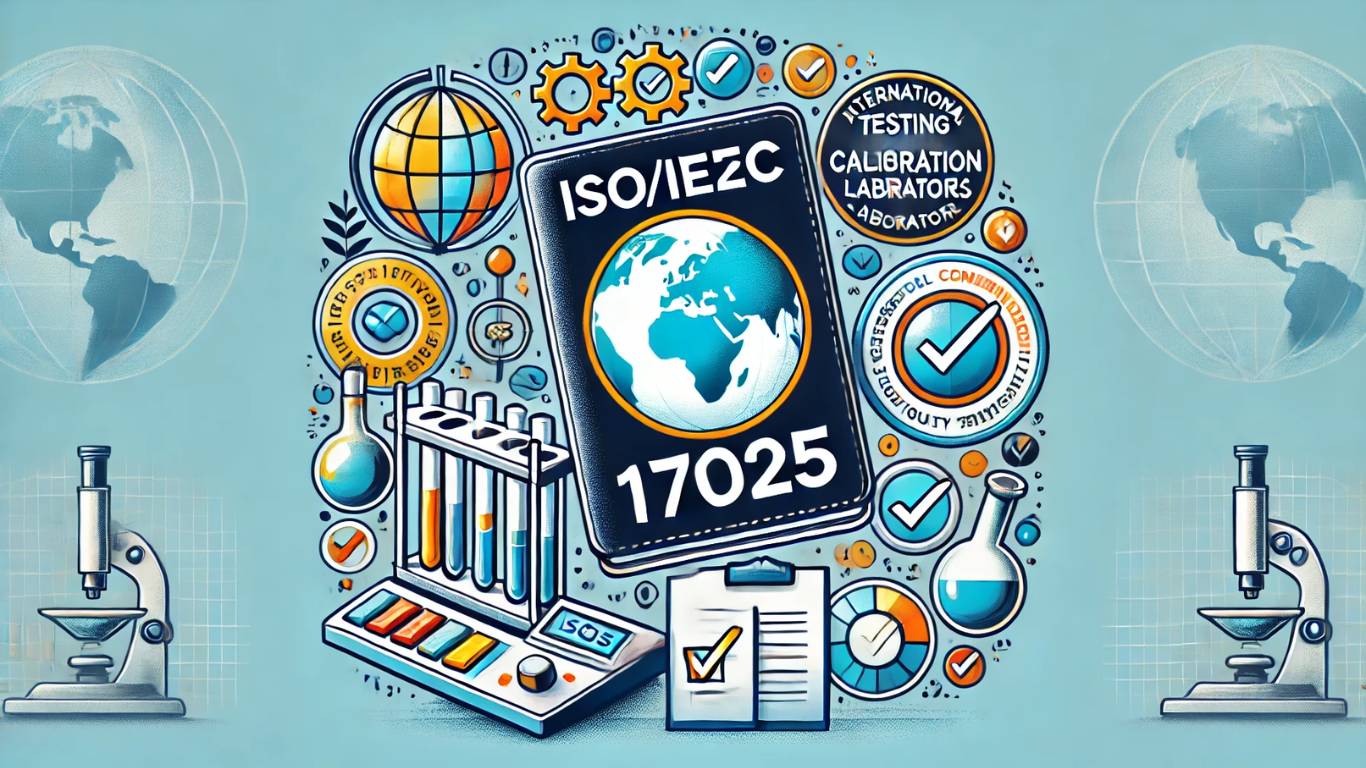
ISO/IEC 17025 is an international standard for quality management systems specifically designed for testing and calibration laboratories. It sets out requirements for technical competence and quality management, ensuring laboratories provide accurate, reliable, and consistently valid test and calibration results.
WHY IS ISO/IEC 17025 IMPORTANT?
ISO/IEC 17025 is globally recognized and has become a mandatory requirement in many countries for laboratories seeking widespread acceptance of their test or calibration results.
Ensures Technical Competence: The standard's requirements enable laboratories to demonstrate technical competence in performing tests and calibrations.
International Recognition: Results from laboratories accredited to ISO/IEC 17025 are accepted internationally, minimizing retesting and facilitating global trade.
Enhances Credibility: Ensures test and calibration results are technically valid and highly reliable.
HISTORY OF ISO/IEC 17025
1990 – ISO/IEC Guide 25: The first version was published as a guide named ISO/IEC Guide 25.
1999 – ISO/IEC 17025: It evolved from a guide to an international standard, establishing requirements for technical competence and quality management.
2005 – Enhanced Management Focus: Emphasized the responsibilities of top management, required continuous improvement of the management system, and strengthened customer communication.
2017 – Latest Version: Introduced risk-based thinking, ensuring compatibility with ISO 9001:2015 and enabling laboratories to proactively manage risks and leverage improvement opportunities.
REQUIREMENTS OF ISO/IEC 17025:2017
ISO/IEC 17025:2017 outlines two main categories of requirements:
General and Management Requirements:
Impartiality and Confidentiality: Ensures objectivity and confidentiality of customer information.
Organizational Structure: Clearly defines the authority, responsibilities, and roles of relevant personnel and departments.
Document Control: Ensures all quality management system documents are controlled and updated promptly.
Internal Audits and Management Reviews: Regularly evaluates the system's effectiveness for continuous improvement.
Technical Requirements:
Personnel Competence: Ensures personnel possess the necessary technical expertise for their assigned tasks.
Equipment and Facilities: Must meet technical requirements to guarantee the accuracy and reliability of test results.
Testing and Calibration Methods: Methods should be appropriate, validated, and regularly updated according to international standards.
Quality Assurance of Results: Utilizes quality control measures to maintain accuracy and reliability of test results.
Reporting of Results: Reports must be complete, clear, and accurate, containing all necessary information to interpret the results.
BENEFITS OF IMPLEMENTING ISO/IEC 17025
Enhanced Reputation and Competitiveness:
Globally recognized technical competence builds trust with customers and partners.
Increases opportunities for international collaboration and tender participation.
Cost and Time Efficiency:
Minimizes repeated testing through mutual recognition of test and calibration results.
Facilitates international trade by ensuring global acceptance of test results.
Improved Management Efficiency:
Encourages better management practices to ensure consistent accuracy of test results.
Promotes risk-based thinking, enabling laboratories to proactively manage risks and pursue continuous improvement.
International Cooperation:
Facilitates global collaboration between laboratories, supporting information exchange and harmonization of standards and procedures.
Promotes mutual recognition of test results worldwide, eliminating redundant testing.
ISO/IEC 17025 AND ITS RELATION TO OTHER STANDARDS
ISO 9001: Both standards require quality management systems, but ISO/IEC 17025 focuses on technical competence for laboratories, whereas ISO 9001 emphasizes customer satisfaction and process improvement.
ISO 15189: Similar to ISO/IEC 17025 but specifically designed for medical laboratories.
IMPLEMENTATION OF ISO/IEC 17025:2017 IN VIETNAM
The latest version, ISO/IEC 17025:2017, has been applied in Vietnam since 2018, and laboratories were required to complete the transition by 2020.
Benefits for businesses in Vietnam include:
Enhanced international competitiveness due to globally recognized test results.
Compliance with legal and technical requirements for exporting products to demanding markets such as Europe, the U.S., and Japan.
Strengthened international cooperation, promoting the export of goods and services.


