


WHAT IS THE C-TPAT STANDARD?
C-TPAT stands for Customs-Trade Partnership Against Terrorism, a voluntary security initiative that fosters collaboration between the public and private sectors to enhance supply chain and border security. This standard was introduced by the U.S. government and businesses in the aftermath of the tragic 9/11 terrorist attacks, aiming to establish a cooperative framework to strengthen international supply chain security and safeguard U.S. border security.
Through this initiative, the U.S. Customs and Border Protection (CBP) requires companies to implement comprehensive security practices in their operations and communications while verifying security protocols with their business partners throughout the supply chain.
MAIN CONTENT OF THE C-TPAT STANDARD
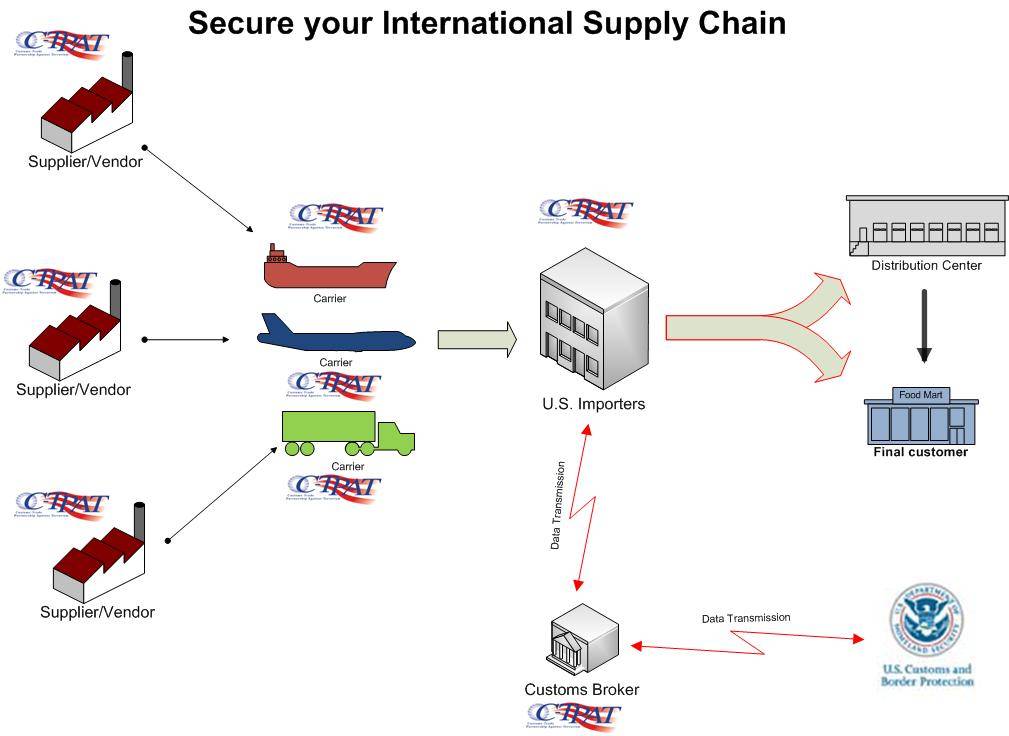
1. Business Partner Requirements
Security Procedures: Documentation to confirm C-TPAT certification status. For partners not eligible for C-TPAT evaluation, compliance with C-TPAT security criteria of foreign manufacturers must be verified.
Point of Origin: Processes and procedures at the origin, assembly, and production sites must comply with C-TPAT security criteria.
Participation Status: Indicate participation or certification status in supply chain security programs managed by foreign customs authorities.
2. Container and Trailer Security
Container Inspection: Inspect front walls, left and right sides, floor, ceiling, and both internal and external doors, as well as the container's external framework.
Trailer Inspection: Check the fifth wheel area, external front and sides, rear bumpers/doors, front walls, left and right sides, floor, ceiling, and internal/external doors, as well as the external framework.
Container and Trailer Seals: Must meet or exceed PAS ISO 17712 standards for high-security seals.
Storage: Containers and trailers must be stored in secure areas to prevent unauthorized access or actions.
3. Physical Access Control
Employees: Implement an employee identification system, define secure areas with authorized access, and document the issuance, retrieval, and changes of access devices.
Visitors: Must present photo identification, be escorted, and display temporary identification clearly.
Deliveries (including mail): Require valid supplier ID or photo ID for verification. Packages and mail should be periodically screened before distribution.
Access Control: Strict control to prevent unauthorized individuals from entering or exiting the premises.
4. Personnel Security
Pre-Employment: Verify background and employment history.
Post-Employment: Conduct periodic checks and re-investigations for sensitive positions or if needed.
Termination: Establish procedures for revoking identification, access devices, and system access.
5. Procedural Security
Documentation Processing: Ensure secure and accurate preparation of documents for cargo clearance.
Cargo Manifest Procedures: Verify the timeliness and accuracy of information received from business partners.
Shipping and Receiving: Compare outgoing and incoming goods with shipping manifests, orders, and delivery notes for accuracy in weight, labels, marks, and quantities. Identify both shippers and receivers and establish procedures to track the movement of goods.
6. Physical Security
Fencing: Secure fences around processing and storage areas to separate domestic, international, high-value, and hazardous goods. Regular inspections are required to maintain integrity.
Gates and Access Controls: Manage and monitor gates and building entry points.
Parking Restrictions: Prohibit parking in or adjacent to cargo handling and storage areas.
Building Structure: Use quality construction materials and conduct regular inspections and maintenance.
Lock and Key Controls: Secure locks and keys for doors, gates, and fences.
Lighting: Ensure adequate lighting both inside and outside the premises.
Alarm and Surveillance Systems: Install alarm systems and surveillance cameras to monitor and record activities.
7. Information Technology Security
Password Protection: Use unique passwords and enforce regular changes.
System Integrity: Implement systems to detect unauthorized access or data modifications.
Security Awareness Training: Educate shipping, receiving, and mail handling personnel on threats from terrorism and smuggling.
TARGET AUDIENCE OF C-TPAT
Parts and Material Suppliers
Manufacturers
Product Suppliers
Contractors
Carriers (Road, Rail, Sea, Air)
Importers
Licensed Customs Brokers and Manufacturers
Freight Consolidators
BENEFITS OF C-TPAT FOR BUSINESSES
Enhanced Security: Identify internal security vulnerabilities and implement corrective actions to minimize risks.
Competitive Advantage: Establish a secure supply chain, expand business opportunities, and enhance brand value.
Risk Mitigation: Prevent loss, fraud, counterfeiting, smuggling, data theft, economic damage, and reputational harm.
Increased Profitability and Growth: According to a survey of 3,901 C-TPAT members in 2010 by the Virginia Survey Research Center, companies experienced profit growth proportional to their participation duration.
Supply Chain Continuity: Reduce disruptions and waiting times at border checkpoints, ensuring smooth cargo movement.
Access to Trade Benefits: Enjoy expedited clearance, participation in other U.S. government pilot programs, and recognition as a trusted trading partner by international customs authorities.
Priority in Disaster Recovery: Receive priority assistance in business recovery following natural disasters or terrorist attacks.
Eligibility for Special Programs: Qualified importers can participate in the Importer Self-Assessment (ISA) program.
Special Consideration: Receive priority consideration at CBP's Centers of Excellence and Expertise.


