Table of contents
1. Online Scoring System
The Higg Facility Environmental Module (Higg FEM) evaluates the environmental performance of manufacturing facilities through a continuously improved online scoring system.
- Continuous Updates: Changes in Higg FEM Scoring may affect evaluation results and are directly updated on the platform.
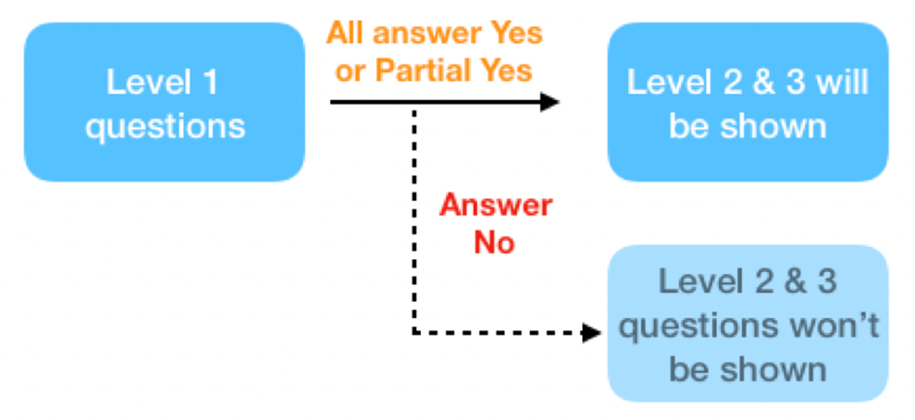
- Objective: To drive behavioral changes for more sustainable outcomes. Points are awarded only if the response is “Yes” or “Partial Yes” to questions aimed at improving environmental performance.
2. Scoring Levels and Weighting
2.1. General Scoring Rules
- Each criterion is assessed at three levels (Level 1, 2, 3) with a maximum total score of 100 points.
- Scoring method for each level:
- Level 1: 25 points (basic compliance and monitoring).
- Level 2: 50 points (implementation of improvements and effective measures).
- Level 3: 25 points (certifications or most advanced solutions).
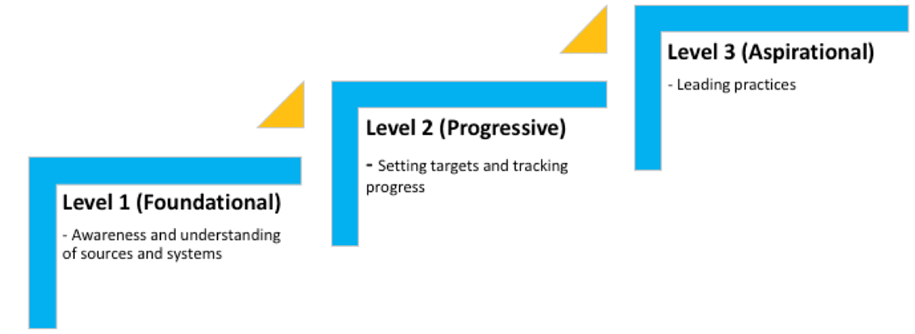
2.2. Meaning of Levels
- Level 1 - Awareness and Compliance:
- Businesses establish basic environmental management and ensure legal compliance.
- Focus on monitoring information and identifying issues.
- Level 2 - Improvement and Optimization:
- Implement measures to minimize negative environmental impacts.
- Measure the effectiveness of solutions through data analysis.
- Level 3 - Leadership and Innovation:
- Achieve international certifications or adopt advanced solutions.
- Commit to long-term sustainability and build a strong reputation.
3. Evaluation Criteria
3.1. Environmental Management System (EMS)
- Monitor and manage environmental risks while establishing reporting procedures.
- Set objectives and measures to minimize environmental impact.
- Obtain ISO 14001 certification or an equivalent standard.
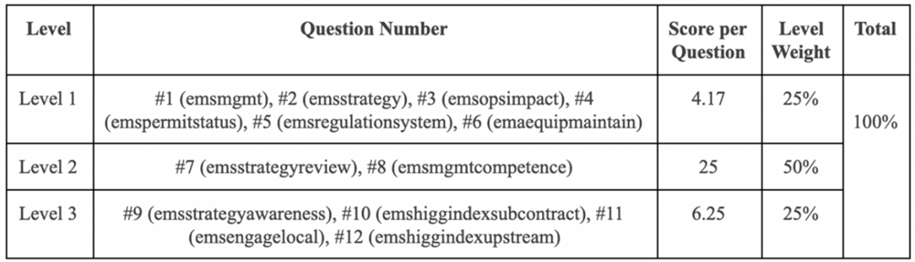
- If Question 10 is applied, the scoring breakdown is as follows:
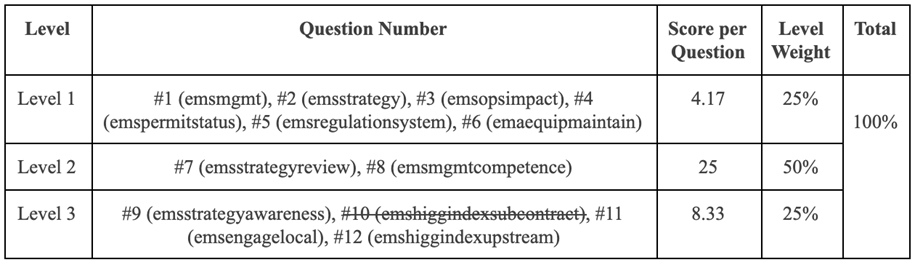
If Question 10 is NOT applied, the scoring breakdown is as follows:
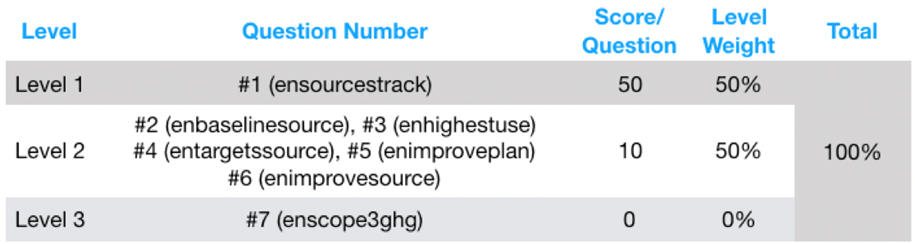
3.2. Energy Consumption and Greenhouse Gas Emissions
• Monitor energy consumption sources and greenhouse gas emissions.• Implement energy-saving solutions or use renewable energy.• Obtain green energy certification or achieve low emission levels.
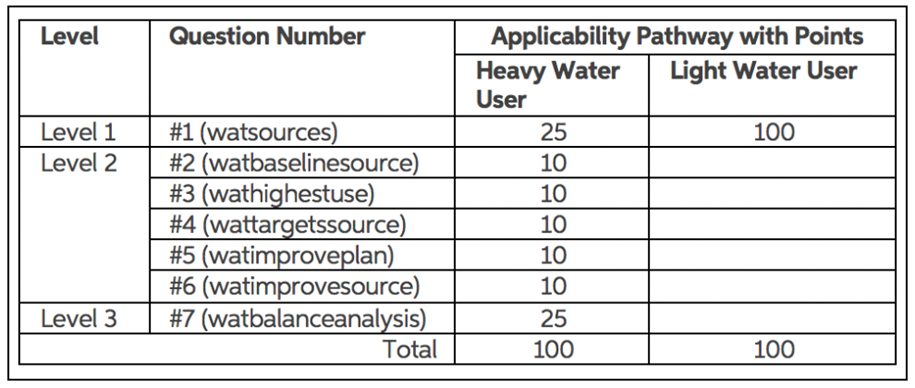
3.3. Water Resource Management
• Monitor water consumption from various sources.• Implement water-saving measures or reuse water.• Apply Zero Liquid Discharge (ZLD) technology.
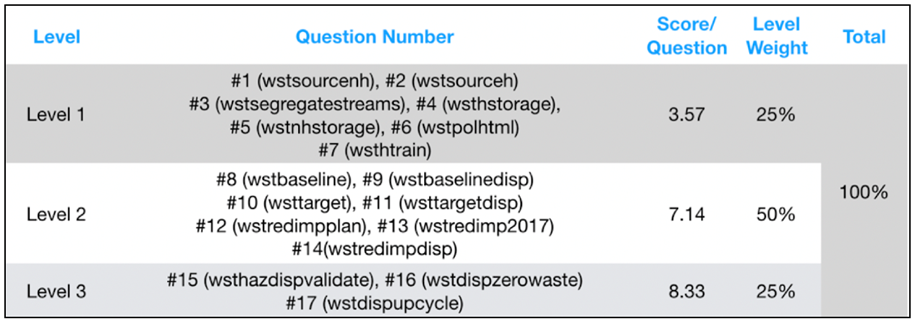
3.4. Waste Management
• Monitor the amount of waste generated.• Implement waste sorting, reduction, and recycling measures.• Achieve "Zero Waste" certification or recycling certification.
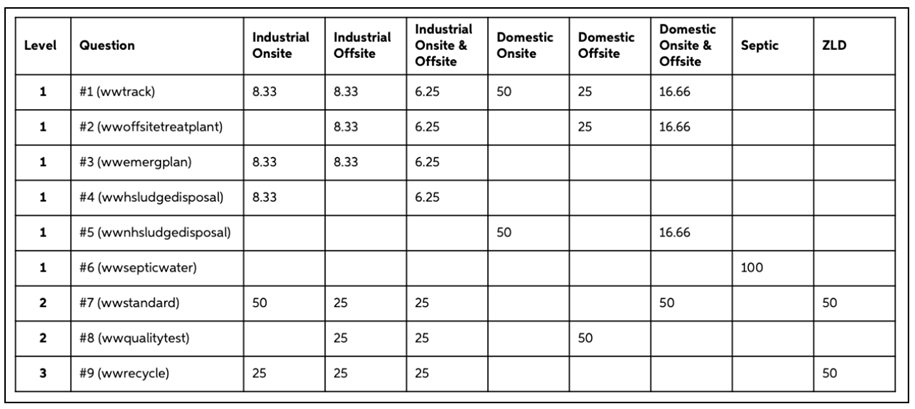
3.5. Wastewater Management
• Monitor the amount of wastewater generated and ensure basic treatment.• Implement a wastewater treatment system that meets international or local standards.• Reuse treated water or achieve zero wastewater discharge.
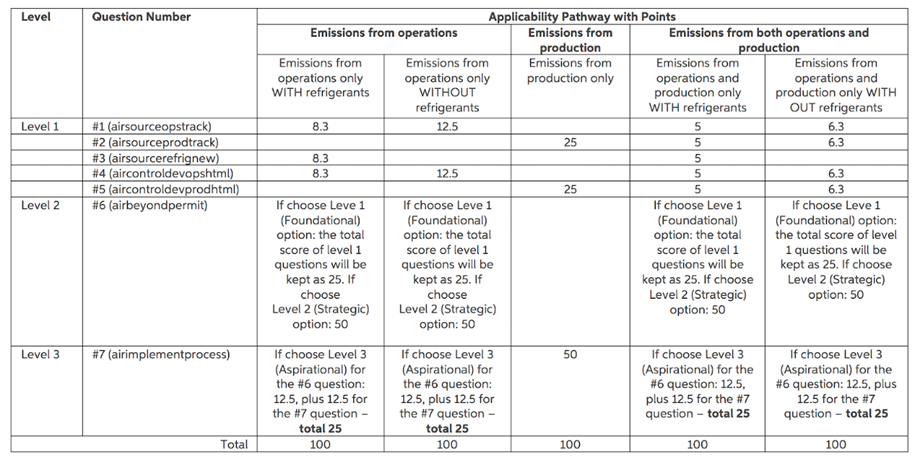
3.6. Air Emissions Management
• Monitor emissions from operations and production activities.• Implement control measures to reduce emissions and ensure regulatory compliance.• Prevent excessive emissions or achieve advanced air emissions management certification.
3.7. Chemical Management
• Monitor the use and storage of chemicals.• Reduce hazardous chemicals and replace them with eco-friendly alternatives.• Eliminate chemical use or obtain chemical safety certification.
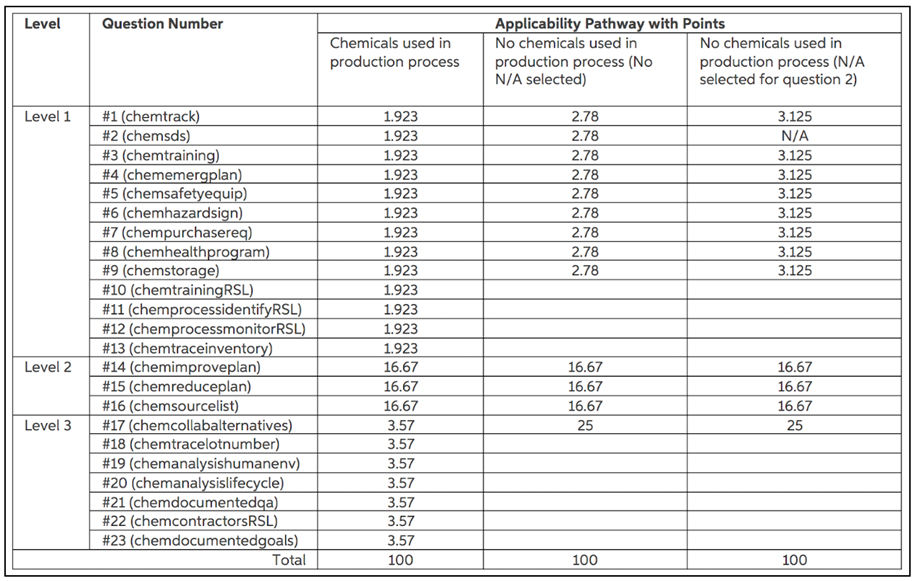
4. Specific Scoring Guidelines
Criteria | Level 1 (25 points) | Level 2 (50 points) | Level 3 (25 points) |
| Environmental Management System (EMS) | Basic monitoring and reporting | Set goals and track improvements | ISO 14001 certification or equivalent |
| Energy & Greenhouse Gas Emissions | Monitor energy sources | Apply emission reduction measures | Verify Scope 3 emissions |
| Water Resources | Monitor water consumption | Optimize and reuse water | Zero Liquid Discharge (ZLD) |
| Waste Management | Full waste monitoring | Classify, reduce, and recycle waste | Achieve Zero Waste certification |
| Wastewater | Monitor wastewater quantity | Treat wastewater to standards | Reuse treated water or zero wastewater |
| Air Emissions | Basic emission control | Reduce emissions and comply with regulations | Achieve advanced air emissions management |
| Chemical Management | Monitor and store chemicals | Reduce hazardous chemicals and use safer alternatives | Eliminate chemicals or achieve chemical safety certification |