Table of contents
1. WHAT IS ISO/IEC 27001 CERTIFICATION?
ISO/IEC 27001 is an information security management system (ISMS) for organizations that process data from customers, stakeholders, or even data within the organization.
 ISMS secures information in all forms. A robust and effective ISMS system maintains high security standards and is designed to protect against cyber attacks. ISMS focuses on maintaining the security of an organization's data assets. Data loss, unauthorized access or breach are threats that an ISMS can handle.
ISO/IEC 27001 covers risk assessment, organizational structure assessment, information classification, access control, implementation of various information security policies, physical and technical protection measures . It also implies monitoring and reporting guidelines.
With leading global standards like ISO/IEC 27001, ISO/IEC 27001 certified organizations can protect their assets and improve their ISMS.
2. Structure of ISO/IEC 27001:2022
The current edition is ISO/IEC 27001:2022, published in October 2022, together with Amendment 1:2024, which requires organizations to consider climate change when determining their context. The standard has two parts:
Clauses 0–3: introduction, scope, normative references, and terms and definitions. These clauses contain no auditable requirements.
Clauses 4–10: the mandatory requirements for an information security management system (ISMS):
Clause 4 – Context of the organization
Clause 5 – Leadership
Clause 6 – Planning (including information security risk assessment and treatment)
Clause 7 – Support
Clause 8 – Operation
Clause 9 – Performance evaluation
Clause 10 – Improvement
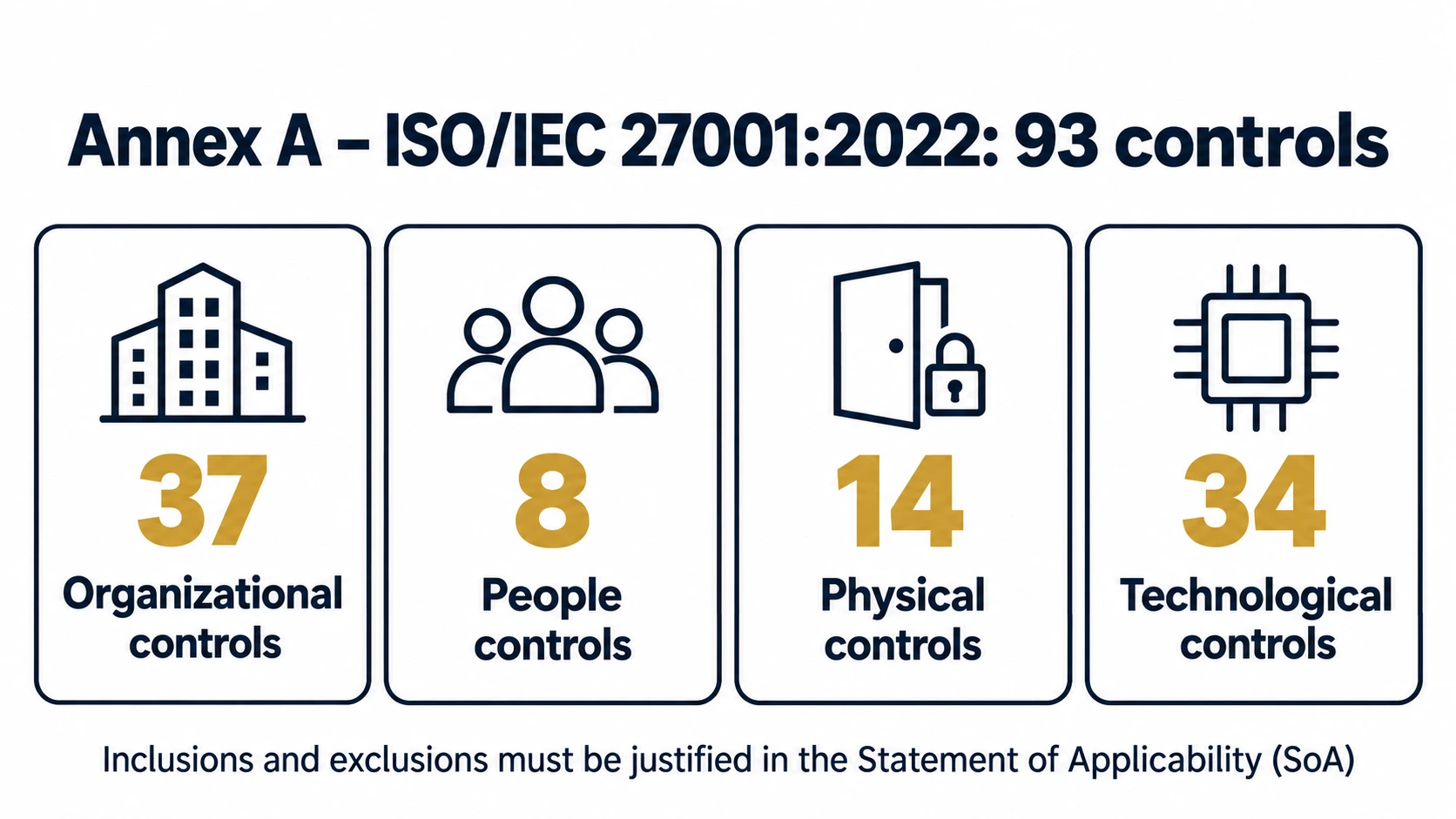
Annex A lists 93 controls in four themes:
| Theme | Number of controls |
|---|---|
| Organizational | 37 |
| People | 8 |
| Physical | 14 |
| Technological | 34 |
The organization must compare its risk treatment controls against all of Annex A and prepare a Statement of Applicability (SoA) stating which controls are applied, which are excluded and why. Annex A is therefore not an "optional" list: not every control has to be implemented, but every control must be considered and justified.
Compared with the 2013 edition (114 controls in 14 domains), the 2022 edition reorganizes the controls into 93 controls in four themes and adds new ones such as threat intelligence, information security for the use of cloud services, and ICT readiness for business continuity. The transition period for moving certificates from the 2013 edition to the 2022 edition ended on 31 October 2025.
3. BENEFITS OF ISO/IEC 27001 CERTIFICATION FOR ORGANIZATIONS
 The main advantage of ISO/IEC 27001 is that it demonstrates an organization's commitment to information security. Other benefits are:
Save costs and time
Physical and environmental security
Get new business and increase your competitive advantage
Information security processes are recognized globally
Identify and mitigate security threats and vulnerabilities
Avoid fines and financial loss due to data breaches when integrated with Data Protection Trustmark
Comply with business, legal, contractual and regulatory requirements
Protect information and keep it safe
Develop accountability throughout the organization
Assure employees, customers, suppliers and stakeholders
Integrate business operations and information security
The company's risk strategy and management processes are enhanced
4. BENEFITS OF ISO/IEC 27001 CERTIFICATION FOR BUSINESS CUSTOMERS
Besides inspiring your customers, here are some other benefits for ISO/IEC 27001 certified organizations:
Keep intellectual property and customer information protected
Create trust between customers and stakeholders
Secure exchange and storage of information
Reassure customers that you are meeting your legal obligations
Enhanced customer satisfaction leads to improved customer retention rates
5. HOW TO ACHIEVE ISO/IEC 27001 CERTIFICATION?
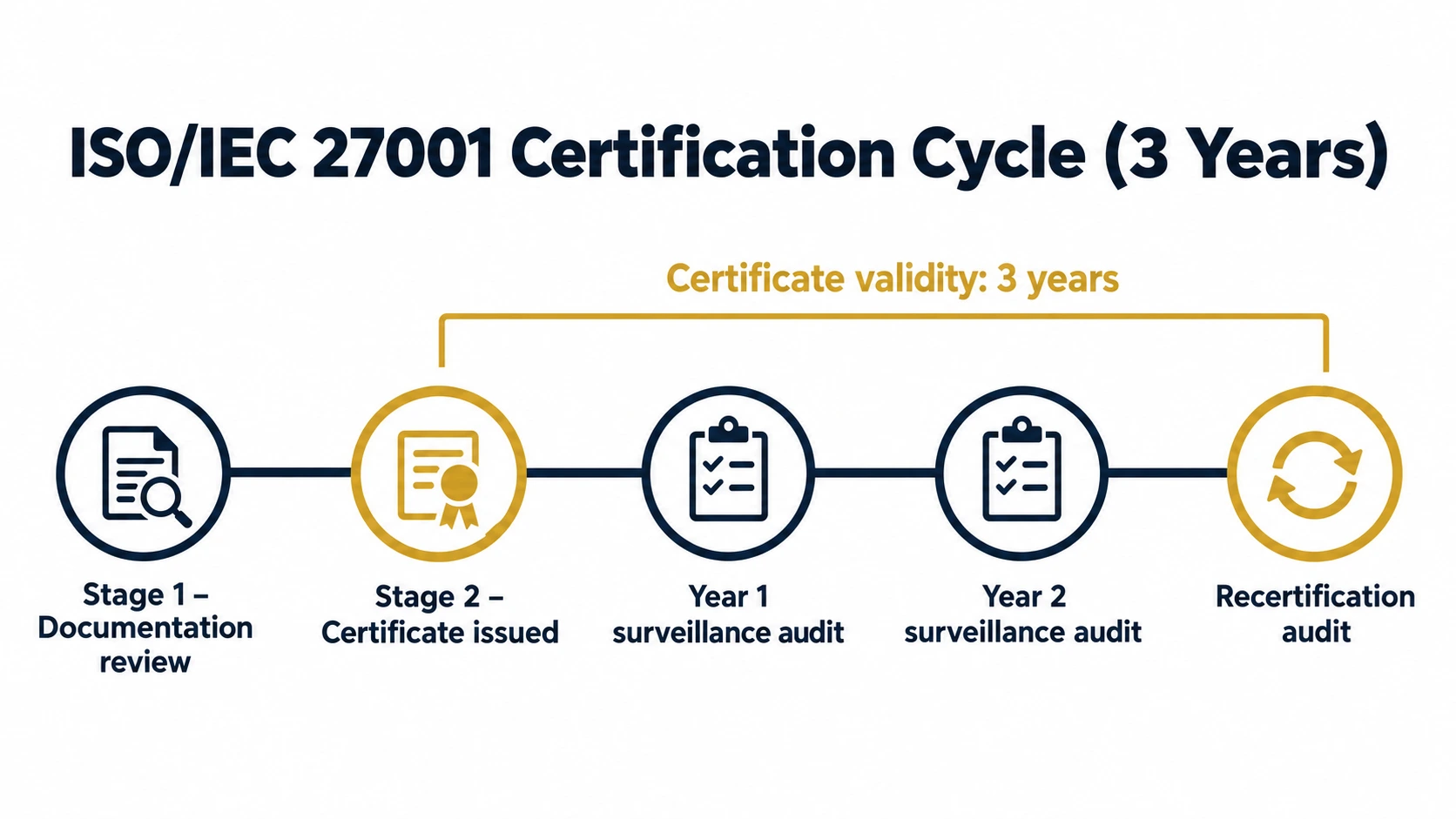
The certification process is as follows:
Phase I – Document review of the organization's preparedness for ISO/IEC 27001 procedures and controls.
Phase II – Once all requirements are met in Phase 1, subsequent assessments will be conducted through on-site/remote assessments, interviews, and with other assessment methods to ensure ensure full compliance with the requirements of ISO/IEC 27001
Certifications and more
The ISO/IEC 27001 certificate is issued by an accredited certification body after a successful Stage 2 audit. It is valid for three years, during which the organization undergoes periodic surveillance audits (usually annually) and must be recertified before the certificate expires.
6. WHO SHOULD PARTICIPATE IN AN ISO/IEC 27001 ISMS CERTIFICATION ASSESSMENT?
Key stakeholders include:
Information security management
IT management and enterprise security
Director of corporate governance
Risk and compliance manager
Internal legal team
Personal data and records management team
Any management representative or employee responsible for ISMS quality assurance
TTS Cert supports businesses preparing for social compliance, environmental and carbon, recycled materials and supply chain security standards. See all services

Expert Pham Van Chien has nearly 20 years of experience in quality management, information security and product technical standards.
SEE MORE