
Table of contents
The Carbon Border Adjustment Mechanism (CBAM) is the European Union's mechanism for applying a carbon price to emissions embedded in selected goods imported into the EU. It is intended to reduce the risk of carbon leakage and bring the carbon-cost treatment of imported goods closer to that of goods produced within the EU.
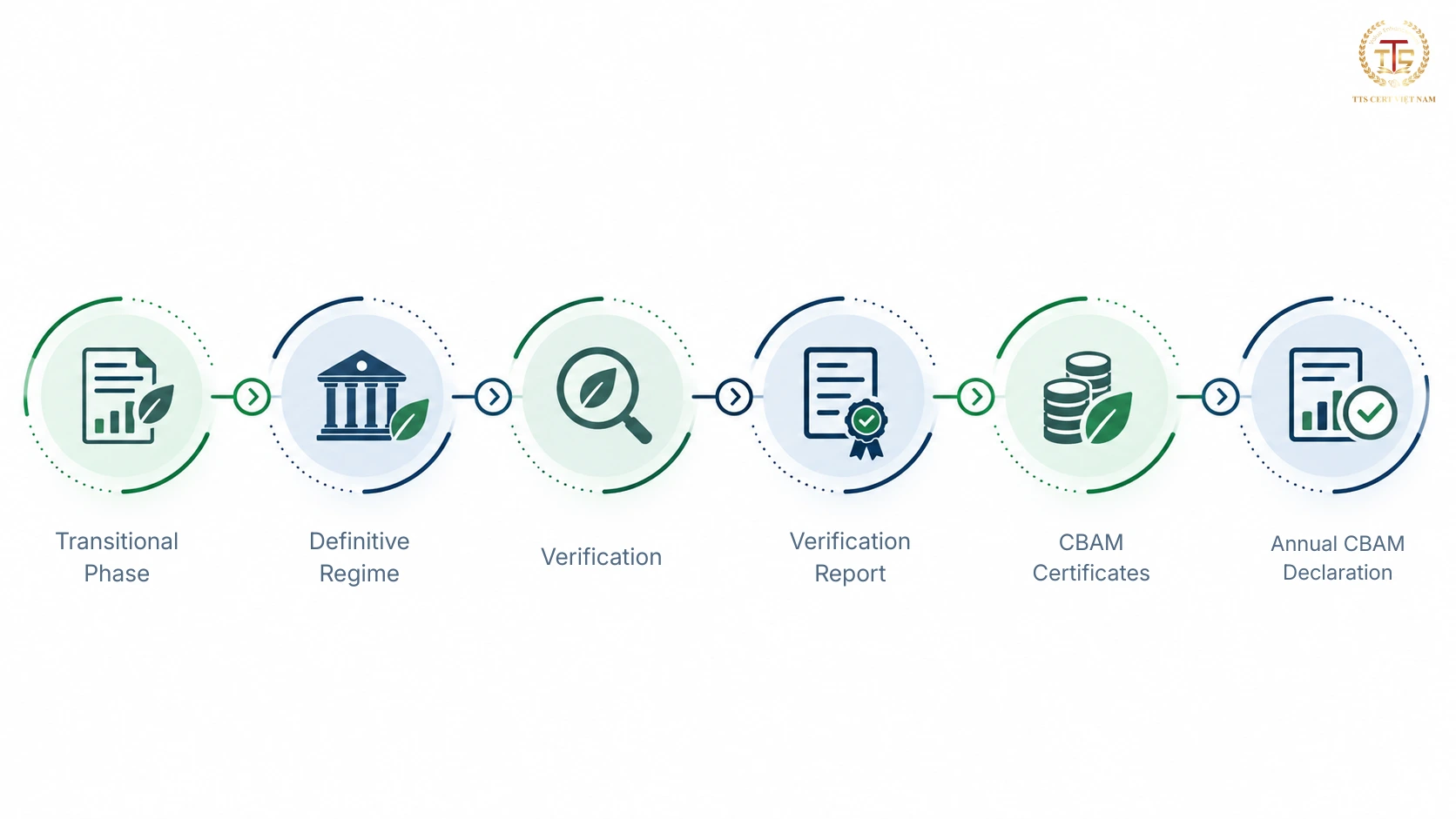
CBAM's transitional phase ended on 31 December 2025. The definitive regime began on 1 January 2026. EU importers or relevant indirect customs representatives falling within the applicable scope now face definitive CBAM obligations, while manufacturers outside the EU increasingly need to provide reliable emissions data, calculations and supporting evidence.
For a manufacturer in Vietnam or another non-EU country, CBAM should not simply be understood as a “certificate” to obtain or a carbon tax that the exporter directly pays to the EU. The practical questions are:
Is the product covered? How much carbon is embedded in the product? Is the underlying data reliable? And is the installation ready for independent verification?
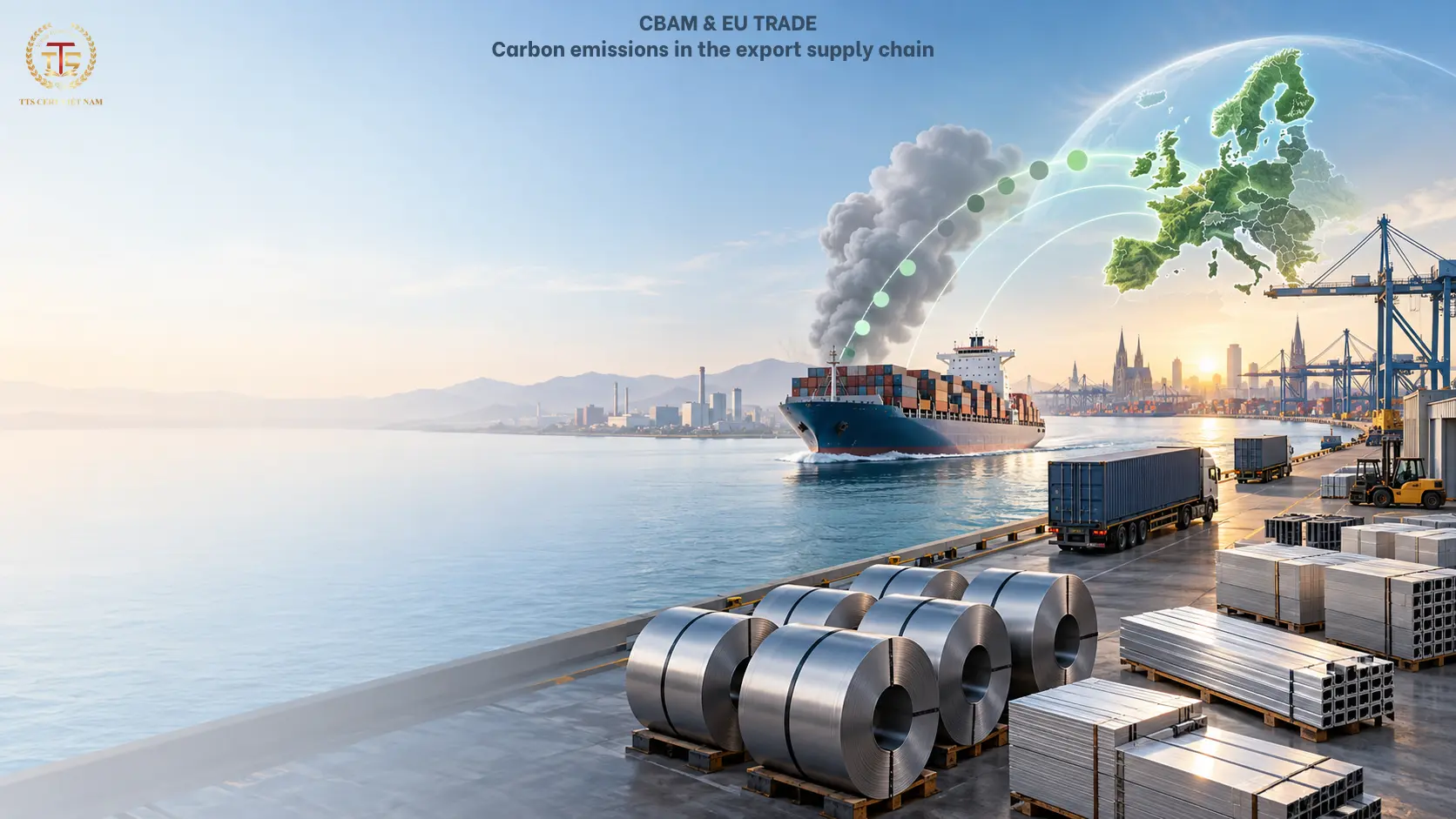
1. What Is CBAM and Why Did the EU Introduce It?
CBAM is designed to address the risk of carbon leakage.
Carbon leakage may occur when production moves from the EU to countries with less stringent climate policies, or when more carbon-intensive imported goods replace products manufactured within the EU.
CBAM complements the EU Emissions Trading System (EU ETS). Under the definitive regime, the relevant EU declarant reports emissions embedded in CBAM goods and must surrender the corresponding number of CBAM certificates, subject to the adjustments provided by the legislation.
Is CBAM a carbon tax?
CBAM is often described as an EU carbon border tax. This description is convenient but does not fully explain how the mechanism operates.
CBAM works through the reporting of embedded emissions and the obligation of the Authorised CBAM Declarant to purchase and surrender CBAM certificates.
A non-EU manufacturer is therefore not automatically the party that purchases CBAM certificates. Its key role is normally to provide reliable information about the emissions embedded in the goods it produces.
2. What Changed Under CBAM in 2026?
From 1 October 2023 to 31 December 2025, CBAM operated under a transitional phase focused mainly on emissions reporting. There was no requirement to purchase CBAM certificates during that period.
The definitive regime started on 1 January 2026.
It introduced a compliance framework involving:
authorised CBAM declarants;
embedded-emissions reporting;
actual and default emission values;
independent verification of actual emissions;
CBAM certificates; and
applicable import thresholds.
EU importers, or their relevant indirect customs representatives, importing more than the applicable 50-tonne single mass-based threshold must apply for Authorised CBAM Declarant status where the threshold applies.
For manufacturers outside the EU, an important development came on 14 August 2026, when the European Commission published ten guidance documents specifically supporting non-EU installation operators during the definitive period.
These documents cover CBAM concepts, monitoring, embedded-emissions calculations, the free-allocation adjustment and sector-specific requirements.
Companies should therefore avoid relying solely on procedures or spreadsheets created for the 2023–2025 transitional phase.
Read more: CBAM rules for 2026–2027
3. Who Is Responsible for CBAM?
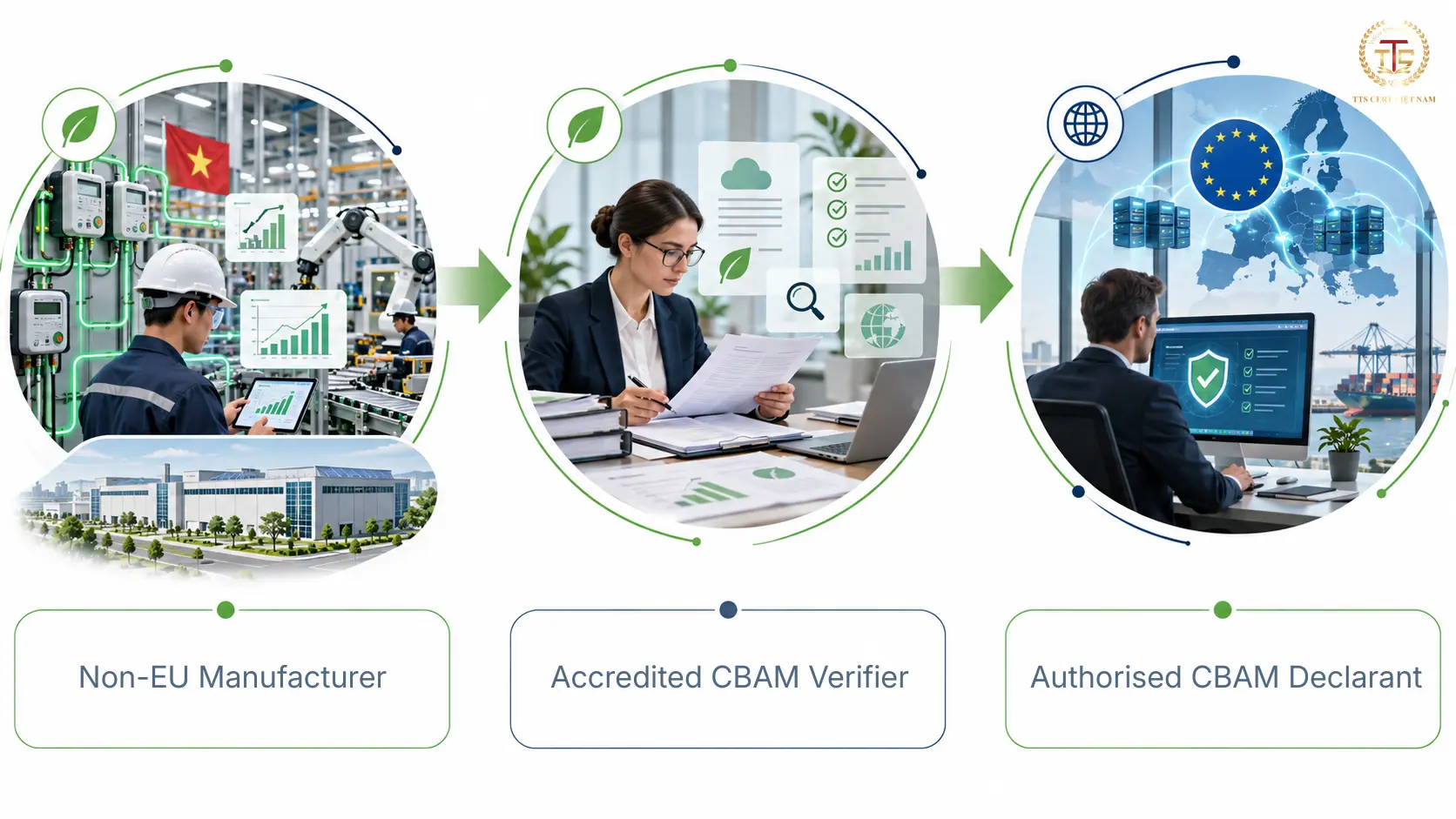
One of the most important distinctions in CBAM is that the EU importer, the non-EU manufacturer and the verifier have different responsibilities.
3.1 EU Importer / Authorised CBAM Declarant
The relevant importer or indirect customs representative in the EU may be required to obtain Authorised CBAM Declarant status.
Its responsibilities include completing CBAM obligations in the EU, using the relevant emissions information and managing the corresponding CBAM certificate obligations.
3.2 Non-EU Manufacturer
A manufacturer outside the EU may need to:
identify the relevant installation and production processes;
establish an appropriate monitoring approach;
collect production, fuel, electricity and material data;
identify relevant precursors;
calculate embedded emissions;
maintain supporting evidence;
communicate emissions information to the EU customer; and
prepare the information required for verification.
3.3 Accredited CBAM Verifier
Where actual emissions are used, the emissions information must be verified under the CBAM verification framework.
CBAM verification takes place at the level of the installation where the goods are produced.
An accredited verifier reviews the monitoring approach, emissions calculations and supporting evidence before issuing a verification report.
This is an important distinction:
CBAM verification is not the same as certifying a factory as “CBAM certified.”
4. Which Products Are Covered by CBAM?
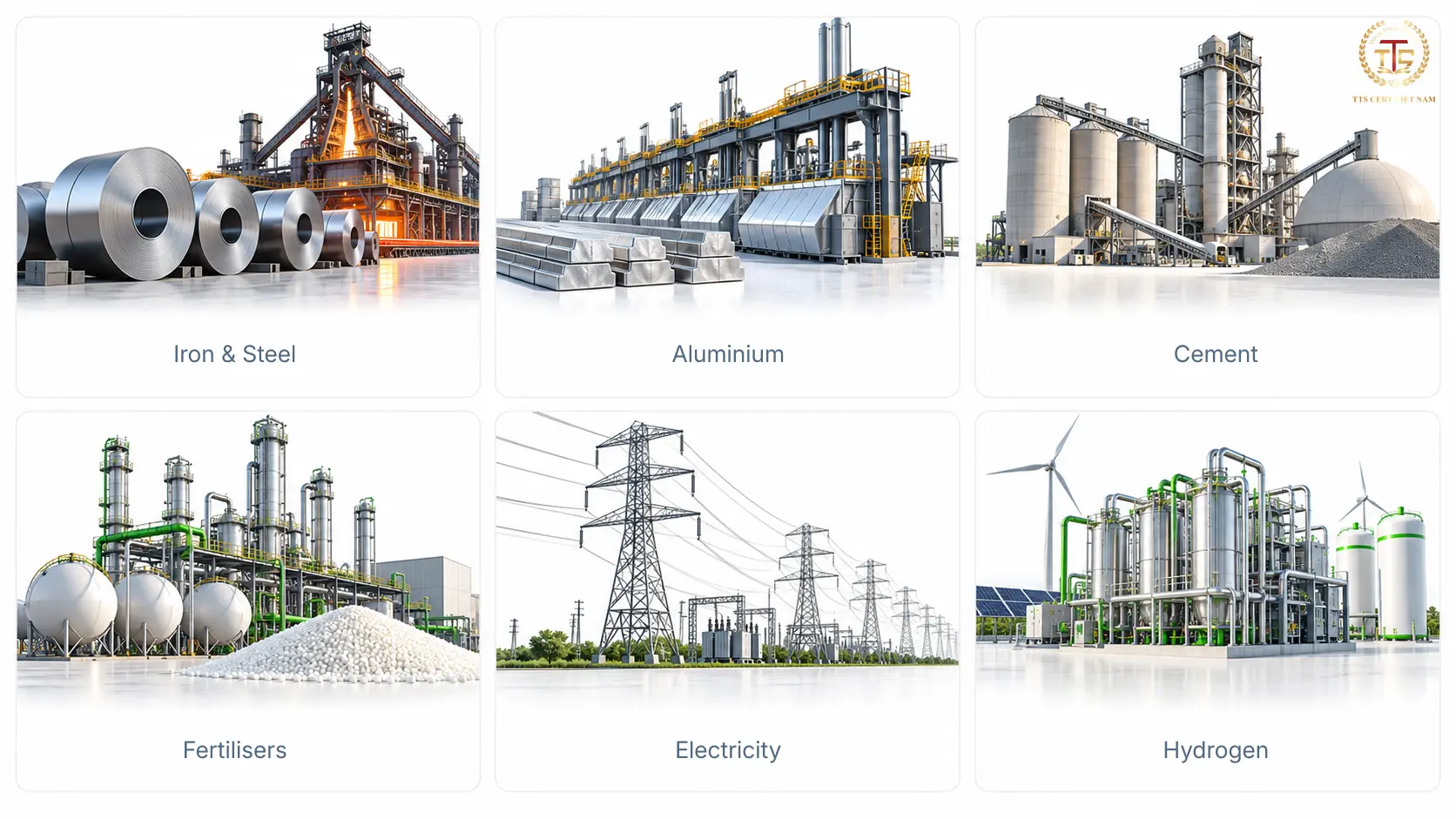
CBAM currently covers selected goods in six sectors:
Iron and steel – Aluminium – Cement – Fertilisers – Electricity – Hydrogen.
However, a company should not determine CBAM applicability solely from the name of its industry.
The legal scope depends on the relevant goods and EU Combined Nomenclature (CN) codes.
A steel manufacturer, for example, should not assume that every product it produces automatically falls under CBAM.
What is the 50-tonne CBAM threshold?
For the relevant categories, including cement, iron and steel, aluminium and fertilisers, the definitive regime uses a single annual mass-based threshold of 50 tonnes at importer level.
Electricity and hydrogen are not covered by the same 50-tonne exemption mechanism.
On 30 September 2026, the European Commission reviewed the threshold. Its assessment found that a 50-tonne threshold would exempt approximately 0.87% of embedded emissions, remaining below the regulatory limit of 1%. The current 50-tonne level therefore remains in place.
This means that the statement:
“Our factory exports less than 50 tonnes, so CBAM does not apply.”
may be misleading.
The threshold must be assessed in the context of the EU importer and its cumulative annual imports.
Read more: which products and CN/HS codes are covered by CBAM
Read more: how the CBAM 50-tonne threshold works
Not Sure Whether Your Products Fall Under CBAM?
TTS Cert Vietnam supports companies in reviewing products, CN/HS classifications and export arrangements to identify CBAM exposure before investing in emissions-data and calculation systems.
5. What Does the CBAM Preparation Process Look Like?
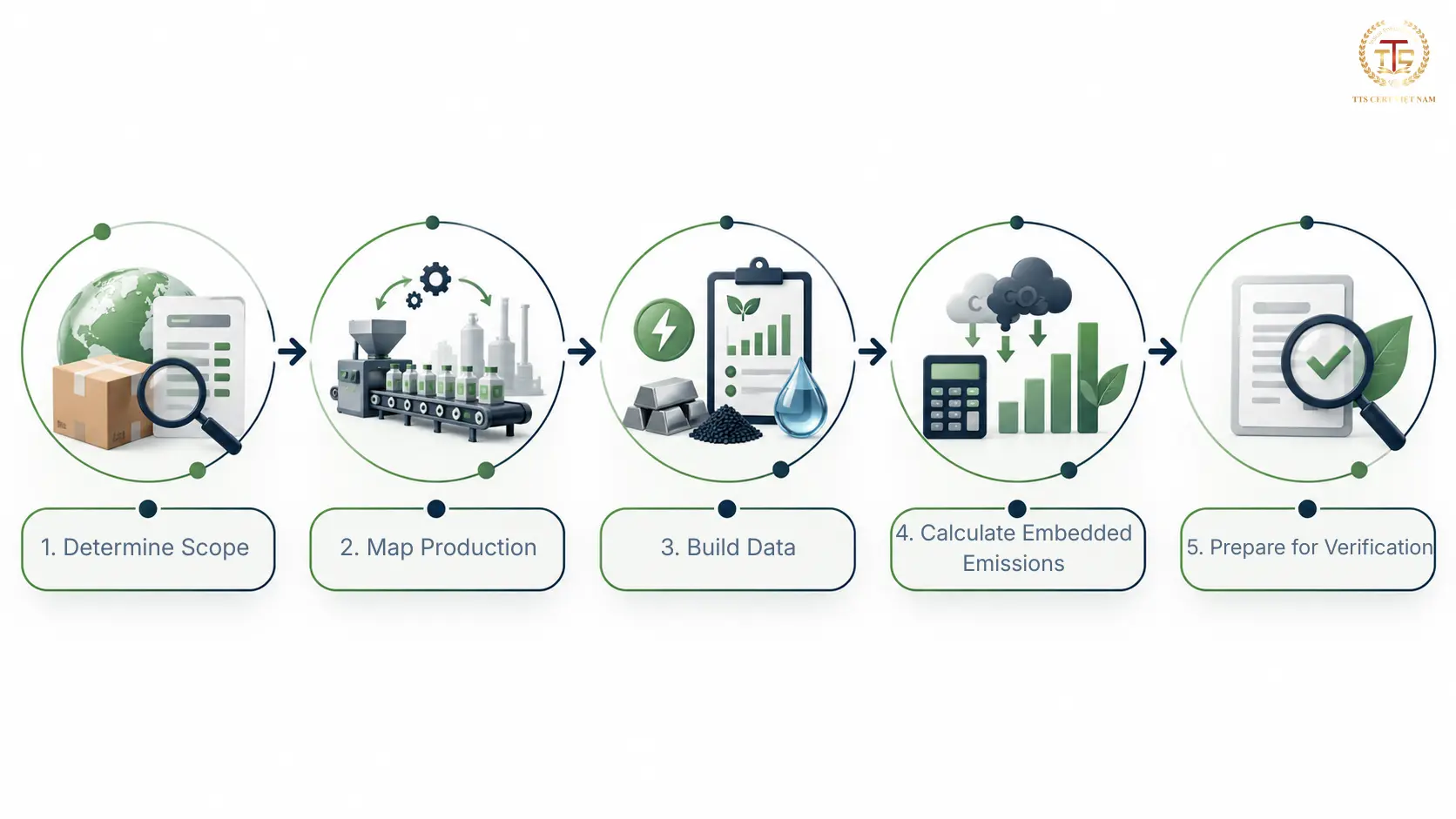
For a non-EU manufacturer, CBAM preparation can be understood through five practical stages.
Step 1 – Determine the Scope
Identify the relevant product and CN/HS classification and confirm whether it falls within the current CBAM scope.
Step 2 – Map the Installation and Production Process
Identify where the goods are produced, the relevant production processes and the boundaries applicable to the emissions calculation.
Step 3 – Build the Data Set
Collect the relevant production, fuel, electricity, material and precursor information required under the applicable CBAM methodology.
Step 4 – Calculate Embedded Emissions
Determine the embedded emissions of the relevant CBAM goods.
Under the current framework, a declarant may use Commission default values or verified actual values, subject to the applicable rules.
Step 5 – Prepare for Independent Verification
Where actual emissions are used, the manufacturer needs a sufficiently robust monitoring approach, calculation methodology and evidence trail to support independent verification.
Read more: how to calculate CBAM embedded emissions
Read more: what data manufacturers need for CBAM
6. What Are Embedded Emissions?
Embedded emissions are the emissions attributed to the production of a CBAM good according to the boundaries and calculation rules established by the EU.
Depending on the sector and production route, the calculation may involve direct emissions, indirect emissions where applicable and emissions associated with relevant precursor materials.
The European Commission published dedicated definitive-period guidance on calculating embedded emissions on 14 August 2026.
Actual Values vs Default Values
| Area | Actual Values | Default Values |
|---|---|---|
| Source | Installation-specific data | Values established by the European Commission |
| Representation of the installation | High | Standardised/default |
| Verification | Required when actual emissions are used for declaration | Does not require verification of installation-specific actual data |
| Practical use | Where reliable monitoring and evidence are available | Where the declarant uses the applicable Commission values |
The European Commission confirms that importers may report emissions using Commission default values or actual values. Where actual values are used, the third-country producer must provide verified emissions data.
The availability of default values does not mean that manufacturers can ignore actual emissions-data management.
EU customers may increasingly want supplier-specific emissions information when assessing carbon exposure, procurement decisions and decarbonisation strategies.
Read more: actual emissions vs default values under CBAM
7. What Is CBAM Verification?
CBAM verification is the independent assessment of emissions information used where actual emissions form the basis of a CBAM declaration.
The verifier reviews the installation's monitoring approach, emissions calculation and supporting evidence.
National Accreditation Bodies ensure that CBAM verifiers are appropriately qualified and provide ongoing oversight.
On 24 August 2026, the European Commission published dedicated guidance on CBAM verification and accreditation. The Commission also established the procedure through which accredited verifiers can access the CBAM Registry from September 2026.
From 1 January 2027, verification reports can be issued through the CBAM Registry under the applicable framework.
For a non-EU manufacturer, verification readiness therefore means more than having a completed spreadsheet.
The organisation should be able to demonstrate:
where the data came from;
how the data were controlled;
which calculation methodology was used;
how production and emissions data are linked; and
whether supporting evidence can be traced back to source records.
Read more: CBAM verification requirements and how to prepare
8. What Is a CBAM Certificate and Who Buys It?
A CBAM certificate forms part of the financial mechanism under the definitive CBAM regime.
The obligation to purchase and surrender CBAM certificates belongs to the Authorised CBAM Declarant, rather than automatically to the non-EU manufacturer.
Certificate prices are linked to EU ETS allowance auction prices. In 2026, prices are calculated quarterly; from 2027, the calculation moves to a weekly basis.
For manufacturers outside the EU, this distinction is important.
Although the manufacturer may not directly purchase CBAM certificates, the carbon intensity of its goods may influence the customer's CBAM exposure and therefore affect:
supplier selection, purchasing negotiations, sourcing strategy and expectations for emissions reduction.
Read more: how CBAM certificates and prices work
9. Key CBAM Dates
1 October 2023
Transitional phase began.
31 December 2025
Transitional phase ended.
1 January 2026
CBAM definitive regime began.
September 2026
Accredited verifiers began gaining access to the CBAM Registry and verification activities could start.
January 2027
Verification reports can begin to be issued through the CBAM Registry.
2027
CBAM certificate purchasing for 2026 imports begins under the definitive financial mechanism.
30 September 2027
The first CBAM declaration covering 2026 imports is due, together with the corresponding certificate surrender obligation.
10. What Should Non-EU Manufacturers Do Now?
A manufacturer does not necessarily need to begin with a complex carbon calculation spreadsheet.
A more practical sequence is to:
confirm the product and CN/HS classification;
identify the EU importer and CBAM arrangement;
assess existing data gaps;
map the installation and production processes;
establish the required monitoring and data controls;
calculate embedded emissions;
organise supporting documentation;
assess verification readiness; and
coordinate with an accredited verifier where actual emissions will be used.
The European Commission specifically recommends that non-EU operators establish an appropriate Monitoring Plan and robust monitoring processes where they intend to use actual emissions data.
Read more: CBAM readiness checklist for manufacturers
11. Common CBAM Misconceptions
Is CBAM a certification scheme?
No. CBAM is an EU carbon-border mechanism, not a management-system or product certification scheme.
Does a non-EU exporter have to purchase CBAM certificates?
Not automatically. The certificate obligation lies with the Authorised CBAM Declarant under the EU framework.
Does ISO 14064-1 automatically satisfy CBAM requirements?
No. ISO 14064-1 and CBAM have different purposes, boundaries and calculation requirements.
A corporate greenhouse-gas inventory may provide a useful data-management foundation, but it does not replace a CBAM-specific embedded-emissions calculation.
Does every product exported to the EU fall under CBAM?
No. Applicability depends on whether the product and its CN code fall within the legal CBAM scope.
Does exporting less than 50 tonnes mean the non-EU factory is automatically exempt?
No. The threshold is assessed at importer level and does not apply in the same way to electricity and hydrogen.
12. How TTS Cert Vietnam Supports CBAM Implementation
TTS Cert Vietnam supports companies throughout the CBAM preparation process — from determining applicability, building emissions data, calculating embedded emissions and preparing documentation to pre-verification readiness. When formal verification is required, TTS coordinates with a CBAM verifier accredited under the EU framework to support companies in carrying out the verification process in Vietnam in a more convenient and consistent manner.
Our CBAM support focuses on five areas.
CBAM Applicability Review
We review products, CN/HS classifications, production installations and EU customer requirements to help determine the relevant CBAM scope.
Emissions Data Preparation and Review
We support companies in identifying and organising production, fuel, electricity, material and other relevant data required for CBAM calculations.
Embedded Emissions Calculation
We support manufacturers in understanding and applying the appropriate CBAM calculation methodology for their sector and production process.
Documentation and Pre-Verification Readiness
Before formal verification, TTS can review calculations, source data, traceability and supporting evidence to identify gaps that should be addressed.
Coordination with an Accredited CBAM Verifier
When formal verification is required, TTS coordinates with a CBAM verifier accredited under the EU framework to support documentation preparation, communication and the practical organisation of the verification process in Vietnam.
Formal verification and the verification report remain under the independent responsibility of the accredited verifier. Under the EU framework, CBAM verifiers are subject to accreditation and oversight requirements designed to support competent and independent verification.
From CBAM Data Readiness to Verification
Understanding CBAM is only the starting point. Manufacturers also need emissions data and documentation that can withstand scrutiny by EU customers and, where applicable, an independent verifier.
TTS Cert Vietnam provides a connected CBAM preparation pathway:
Applicability → Data Preparation → Embedded Emissions → Documentation → Pre-Verification Readiness → Verification Coordination