

Why Is Chain of Custody Essential for Sustainable Supply Chains?
Many manufacturers invest in recycled materials to meet customer expectations and sustainability goals. However, purchasing certified recycled materials alone does not automatically prove that the finished products genuinely contain those materials.
The real challenge lies in maintaining traceability throughout the entire production process.
How can a manufacturer demonstrate that recycled materials received from suppliers are the same materials incorporated into the final product?
How can customers be confident that recycled materials have not been mixed with virgin materials without proper control?
The answer lies in a robust Chain of Custody (CoC) system.
Chain of Custody is one of the fundamental requirements in internationally recognized certification schemes such as the Global Recycled Standard (GRS) and the Recycled Claim Standard (RCS). It provides the framework that enables organizations to verify the movement of materials throughout the supply chain and support credible sustainability claims.
Without an effective Chain of Custody system, even products manufactured using recycled materials may fail to satisfy customer or certification requirements.
What Is Chain of Custody?
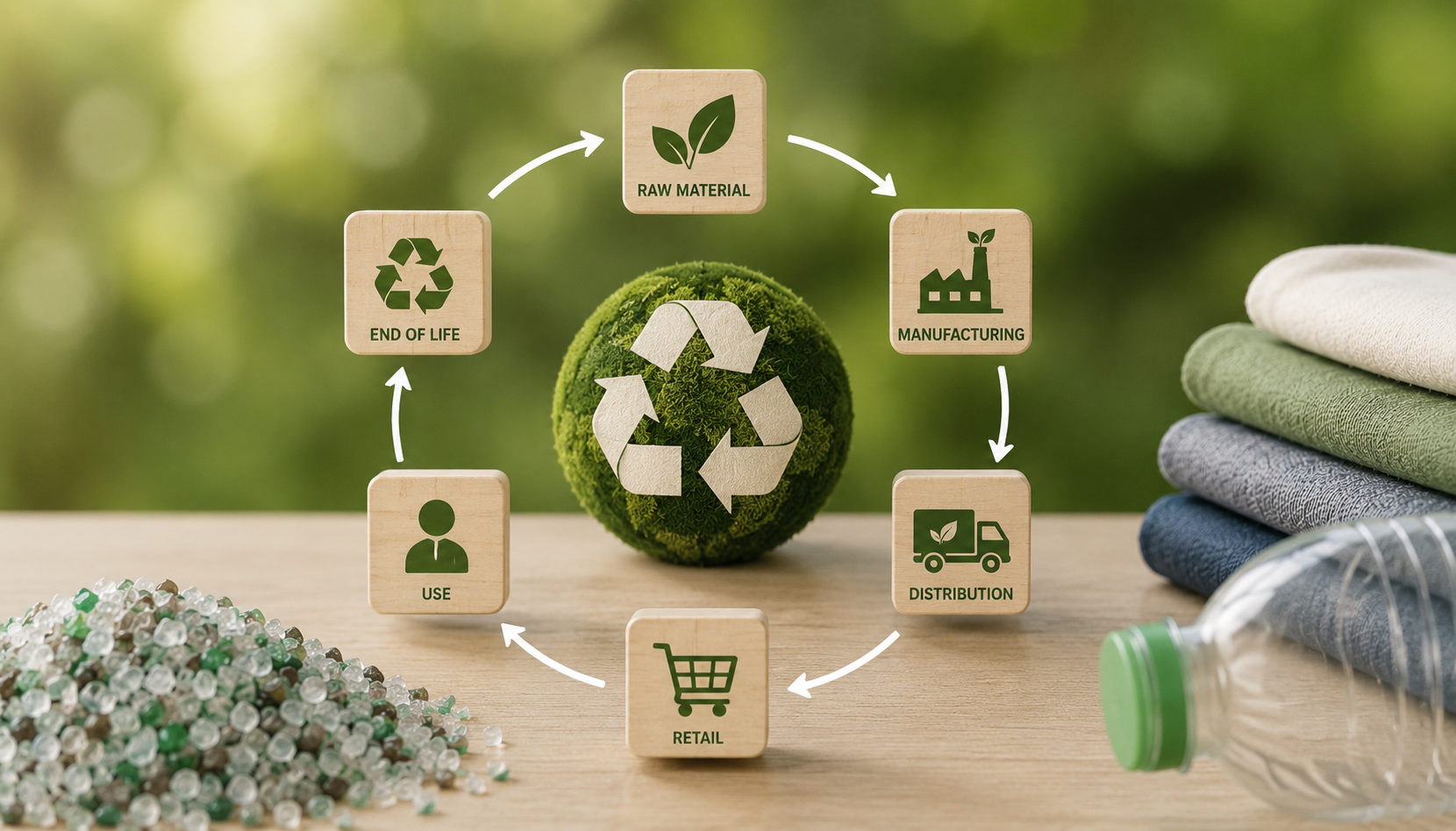
Chain of Custody (CoC) is a documented management system that enables organizations to identify, control, and trace materials throughout every stage of the supply chain—from raw material sourcing to the delivery of finished products.
Its primary objective is to ensure that claims regarding recycled content or certified materials are accurate, transparent, and supported by verifiable evidence.
Rather than focusing solely on the finished product, Chain of Custody evaluates how materials are managed throughout production.
This includes receiving materials, storage, inventory management, production control, documentation, shipping, and record retention.
A well-established Chain of Custody system creates confidence that sustainability claims are based on documented facts rather than assumptions.
How Does a Chain of Custody System Work?
Although implementation varies depending on the organization and applicable certification standard, a typical Chain of Custody system includes several key processes.
Supplier Verification
The process begins before materials arrive at the factory.
Organizations should verify that suppliers are capable of providing valid documentation supporting recycled material claims.
This may include certification documents, Transaction Certificates, delivery documentation, and purchasing records.
Supplier verification helps ensure that only eligible materials enter the certified supply chain.
Receiving and Material Identification
Upon arrival, incoming materials should be inspected, recorded, and clearly identified.
Organizations typically assign batch numbers or identification codes that enable materials to be traced throughout production.
Proper identification reduces the risk of confusion between recycled materials and conventional materials stored within the same facility.
Storage and Inventory Control
Certified materials should be appropriately controlled during storage.
Depending on the applicable certification requirements, organizations may use physical segregation, clear identification, or approved inventory management systems to prevent unintended mixing.
Accurate inventory records are equally important because they provide evidence supporting material traceability and Material Balance calculations.
Production Control
Throughout manufacturing, organizations should maintain documented procedures describing how certified materials are handled.
This includes:
Production planning
Batch identification
Material issuance
Work-in-progress control
Production records
The objective is to ensure that recycled materials remain traceable throughout every production stage.
Finished Product Traceability
Once production is completed, organizations should be able to trace finished products back to the recycled materials originally received.
This capability enables businesses to respond efficiently to customer inquiries, certification audits, and supply chain verification requests.
Traceability is one of the strongest indicators of a mature and reliable management system.
Benefits of Implementing Chain of Custody
An effective Chain of Custody system delivers benefits that extend well beyond certification.
Organizations implementing robust traceability systems often experience improvements in operational efficiency, inventory management, and customer confidence.
Key benefits include:
Demonstrating the origin of recycled materials
Supporting credible sustainability claims
Enhancing supply chain transparency
Reducing the risk of material mix-ups
Improving inventory accuracy
Facilitating certification audits
Strengthening customer trust
Supporting ESG and sustainability reporting
For many businesses, Chain of Custody evolves into an important management tool rather than simply a certification requirement.
Chain of Custody in GRS and RCS
Although GRS and RCS differ in scope, both standards require organizations to establish an effective Chain of Custody system.
For RCS, Chain of Custody focuses primarily on verifying recycled content and maintaining traceability throughout the supply chain.
For GRS, Chain of Custody operates alongside additional requirements covering environmental management, chemical management, social responsibility, and management systems.
In both cases, organizations are expected to maintain documented procedures demonstrating that certified materials remain identifiable and traceable from receipt through shipment.
This transparency enables certification bodies and customers to verify the integrity of sustainability claims with confidence.
Common Challenges When Implementing Chain of Custody
Many manufacturers already have well-established production management systems.
However, implementing Chain of Custody often introduces new challenges, including:
Inconsistent material identification
Incomplete production records
Limited supplier documentation
Weak inventory controls
Insufficient traceability between raw materials and finished products
Lack of documented Material Balance calculations
Addressing these issues usually does not require rebuilding existing production systems.
Instead, organizations often benefit from integrating additional traceability controls into their current management processes.
Expert Insight from TTS Cert
Through our experience supporting manufacturers across various industries, we have found that most organizations already possess many of the operational controls required for Chain of Custody.
The missing element is often not the production process itself, but the documentation that connects every stage of material movement.
Simple improvements—such as standardized material identification, supplier verification procedures, production traceability records, and inventory reconciliation—can significantly strengthen an organization's ability to comply with international certification requirements.
Rather than viewing Chain of Custody as additional paperwork, businesses should recognize it as a management tool that improves operational transparency and builds long-term customer confidence.
Conclusion
As global supply chains place increasing emphasis on transparency and sustainability, Chain of Custody has become a fundamental business requirement rather than simply a certification obligation.
Organizations that can demonstrate complete traceability of recycled materials are better positioned to satisfy customer expectations, support credible sustainability claims, and strengthen their competitive advantage in international markets.
Whether preparing for GRS, RCS, or other sustainability certifications, implementing an effective Chain of Custody system provides the foundation for transparent, responsible, and future-ready manufacturing.
Frequently Asked Questions
What is Chain of Custody?
Chain of Custody is a documented management system that tracks and controls materials throughout the supply chain, ensuring complete traceability from raw material to finished product.
Why is Chain of Custody important?
It enables organizations to demonstrate that sustainability claims, including recycled content claims, are supported by reliable documentation and traceable records.
Is Chain of Custody required for GRS and RCS?
Yes. Both GRS and RCS require organizations to establish documented Chain of Custody procedures to ensure material traceability.
Does Chain of Custody require physical separation of materials?
Not always. Depending on the applicable certification standard, organizations may use physical segregation, clear identification, or approved inventory control methods to maintain traceability.
How does Chain of Custody support sustainability?
By providing transparency throughout the supply chain, Chain of Custody strengthens customer confidence, supports responsible sourcing, and enables credible sustainability reporting.


