
Origin, Criteria of Higg FEM, and the Serious Disadvantages of Not Implementing Higg FEM
I. THE ORIGIN OF HIGG FEM: COMBATING “AUDIT FATIGUE”
Higg FEM was created as an essential solution to overlapping and inefficient environmental audits. Before 2012, a single factory often faced dozens of different environmental assessments from major buyers—each with its own criteria and templates. Higg FEM provides the following advantages:
Collective Initiative: Cascale (Sustainable Apparel Coalition) brought together major industry competitors (brands, retailers, manufacturers, NGOs) to develop a unified environmental standard.
Defined Purpose: The core goal of Higg FEM is to establish a “Measure Once, Share Many” system, helping suppliers save resources and focus on actual performance improvement instead of reacting to multiple audits.

II. THE 7 PILLARS OF HIGG FEM CRITERIA: THE FOUNDATION OF GREEN PERFORMANCE
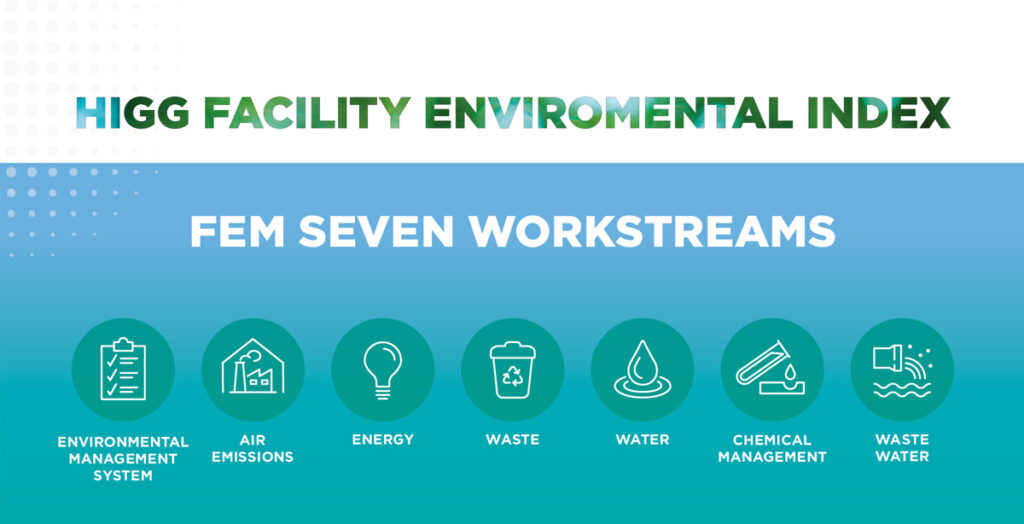
Higg FEM evaluates the environmental performance of manufacturing facilities based on 7 detailed impact areas, each requiring quantitative data and system-based evidence:
Environmental Management System: Reviews environmental commitment, policies, and managerial responsibility.
Energy Use & GHG Emissions: Requires accurate accounting of energy consumption (electricity, coal, gas) and calculation of Scope 1 and Scope 2 emissions.
Water Use: Measures total incoming water and its sources (municipal water, groundwater, harvested rainwater).
Wastewater: Includes requirements for wastewater treatment processes, testing frequency, and discharge permits.
Air Emissions: Controls non-GHG air pollutants (e.g., SOx, NOx).
Waste Management: Covers waste segregation, reduction, and handling of both general and hazardous waste.
Chemical Management: Ensures proper control and safety of chemicals under MRSL/RSL restrictions.
III. THREE SERIOUS DISADVANTAGES OF NOT IMPLEMENTING HIGG FEM OR HAVING A LOW SCORE
Neglecting Higg FEM is not just missing an opportunity—it exposes the business to major risks:
1. Loss of Access to Major Customers (The Door Closes)
Excluded from Preferred Supplier Lists: Most global brands now use Higg FEM as a supplier screening criterion. A score below the minimum threshold (e.g., under 60%) can lead to immediate disqualification from sourcing or bidding processes.
Lack of Transparency: Without a verified Higg FEM report, suppliers cannot meet modern requirements for supply chain transparency, leading to lost trust and difficulty securing long-term partnerships.
2. Environmental Risks and Uncontrolled Operational Costs
Hidden Cost Increases: Without Higg FEM, factories lack a standardized tool to track resource efficiency. This results in wasteful energy, water, and chemical consumption—directly increasing production costs.
Legal Compliance Risks: Poor environmental management systems raise the likelihood of violations in wastewater, emissions, and hazardous waste regulations—leading to penalties and operational disruption.
3. Loss of Benchmarking Advantage
No Industry Comparison: Higg FEM is the most powerful benchmarking tool in the global textile supply chain. Without it, businesses cannot identify where they stand relative to competitors.
Difficult to Improve: Without year-over-year quantitative data, it is impossible to determine which areas (energy, water, chemicals) need investment for environmental optimization.
IV. CONCLUSION AND THE ROLE OF TTS-CERT
Higg FEM is an essential tool for any sustainable export strategy. TTS-CERT helps businesses not only achieve strong Higg FEM scores but also optimize production processes—turning environmental responsibility into a long-term competitive advantage.