


What Are Recycled Materials? Their Role in the Circular Economy and Sustainable Supply Chains
Recycling Is No Longer Just About Waste Management
For many years, when people thought about recycling, they typically associated it with collecting plastic bottles, used paper, aluminum cans, or other waste materials for disposal and reprocessing. While this perception is not incorrect, it no longer reflects the full significance of recycling in today's global economy.
As sustainability and the Circular Economy become central business priorities, recycling has evolved far beyond a waste management practice. For manufacturers—particularly those operating in the textile, packaging, plastics, paper, furniture, and consumer goods industries—recycled materials have become a strategic business resource rather than simply an environmental initiative.
This transformation has been driven by multiple factors. International brands increasingly require suppliers to demonstrate the origin of raw materials, verify recycled content, and maintain transparency throughout the entire supply chain. Investors are paying closer attention to ESG (Environmental, Social, and Governance) performance, while consumers are actively choosing products that minimize environmental impact.
As a result, manufacturers are expected not only to produce high-quality products but also to prove where their materials come from, how they are managed, and whether their sustainability claims can be independently verified.
Today, the key question is no longer:
"Should we use recycled materials?"
Instead, companies are asking:
"How can we effectively manage and verify recycled materials throughout our supply chain?"
This growing demand for transparency has led to the widespread adoption of internationally recognized certification standards such as the Global Recycled Standard (GRS) and the Recycled Claim Standard (RCS). These standards enable organizations to verify recycled content, establish reliable Chain of Custody systems, and strengthen supply chain transparency.
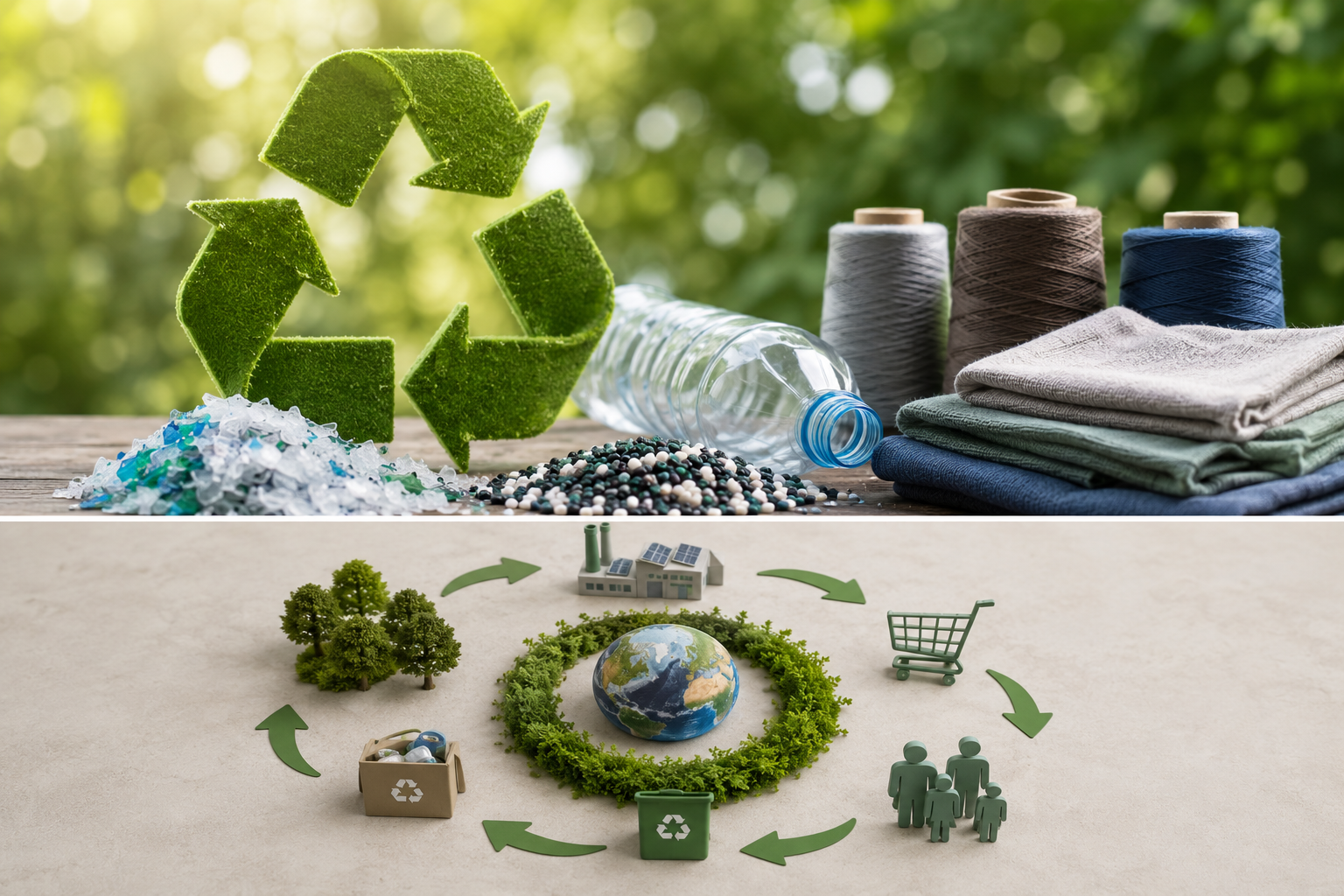
What Are Recycled Materials?
Recycled Materials are materials recovered from post-consumer products or manufacturing waste that are processed and reintroduced as raw materials for new production cycles.
Unlike virgin materials extracted directly from natural resources, recycled materials help extend the lifecycle of valuable resources, reduce waste generation, and minimize the extraction of new raw materials. They are therefore considered a fundamental element of the Circular Economy, where materials remain in use for as long as possible instead of following the traditional linear model of take – make – use – dispose.
Depending on their source, recycled materials are generally classified into two categories.
Pre-consumer Recycled Materials
Pre-consumer recycled materials are generated during manufacturing processes before products reach the end user. Although these materials become production waste, they retain economic value and can be recovered and recycled into new raw materials.
Typical examples include:
Fabric offcuts generated during garment cutting
Defective yarn produced during spinning
Plastic scrap from injection molding processes
Paper waste generated during printing and converting
Metal offcuts from machining operations
Because these materials originate directly from manufacturing processes, they usually have consistent quality and require relatively straightforward recycling procedures.
Post-consumer Recycled Materials
Post-consumer recycled materials are recovered after products have completed their intended use and have been discarded by consumers.
Common examples include:
Used PET bottles
Plastic packaging
Used garments
Waste paper
Aluminum beverage cans
End-of-life electronic devices
Glass containers
Unlike pre-consumer materials, post-consumer materials generally require more complex collection, sorting, cleaning, and processing before they can be reused in manufacturing. Nevertheless, they play a vital role in reducing landfill waste, conserving natural resources, and supporting sustainable production systems.
Today, recycled materials are widely used across numerous industries, including textiles, packaging, plastics, paper, automotive manufacturing, electronics, and construction.
However, using recycled materials is only the first step.
International buyers increasingly expect manufacturers to demonstrate the origin, recycled content, and traceability of those materials. This ability to provide credible evidence is what distinguishes companies that merely use recycled materials from those capable of meeting global sustainable supply chain requirements.
Why Are Businesses Increasingly Using Recycled Materials?
A decade ago, cost was often the primary factor when manufacturers selected raw materials. Today, purchasing decisions are influenced by a much broader range of considerations. Sustainability commitments, customer expectations, regulatory developments, and long-term business resilience have transformed recycled materials from an alternative option into a strategic business decision.
Across industries such as textiles, packaging, plastics, paper, and furniture manufacturing, recycled materials are no longer viewed solely as an environmental initiative. Instead, they have become an essential component of supply chain management and corporate sustainability strategies.
Meeting Growing Customer Expectations
Global brands are raising the sustainability requirements imposed on their suppliers. In addition to product quality, pricing, and production capacity, suppliers are increasingly expected to demonstrate the percentage of recycled content incorporated into their products and provide evidence supporting those claims.
For example, a sportswear manufacturer may produce garments using recycled polyester fibers instead of virgin polyester. However, customers are rarely satisfied with a simple statement that recycled materials are being used.
Instead, they often ask questions such as:
Where were the recycled materials sourced?
Can the supplier provide credible evidence supporting the recycled content?
How are recycled materials controlled during production?
Is there any risk of mixing recycled and virgin materials?
What percentage of recycled content remains in the finished product?
These questions highlight an important reality: sustainability claims must be supported by reliable data and documented management systems rather than marketing statements alone.
As a result, many organizations are investing in robust material management systems that enable them to verify every stage of their supply chain.
Supporting ESG and Corporate Sustainability Goals
Environmental, Social, and Governance (ESG) has become a key consideration for businesses worldwide. Investors, customers, financial institutions, and regulators increasingly evaluate companies based not only on financial performance but also on how responsibly they manage environmental and social impacts.
Using recycled materials contributes directly to several sustainability objectives by helping companies:
Reduce dependence on virgin natural resources
Minimize waste generation
Lower greenhouse gas emissions
Improve resource efficiency
Support circular production models
For organizations developing ESG reports or implementing Net Zero strategies, increasing the use of recycled materials represents one of the most practical ways to improve environmental performance while strengthening corporate reputation.
Consequently, many international brands now include recycled content targets within their sustainability roadmaps and require suppliers to contribute toward achieving these objectives.
Strengthening Competitive Advantage
In today's global marketplace, product quality alone is no longer sufficient to secure long-term business opportunities.
Two manufacturers may produce products of identical quality, yet the supplier capable of demonstrating transparency, traceability, and responsible sourcing is often better positioned to win contracts with international buyers.
This trend is particularly evident in the textile and apparel industry, where global brands increasingly prioritize suppliers capable of complying with internationally recognized sustainability standards.
For many companies, the ability to verify recycled content has evolved from a competitive advantage into a fundamental market requirement.
Businesses that establish effective recycled material management systems today will be better prepared to meet future customer expectations and regulatory developments.
Recycled Materials as the Foundation of the Circular Economy
To fully understand the value of recycled materials, it is important to first understand the concept of the Circular Economy.
Traditional economic models generally follow a linear process:
Extract → Manufacture → Use → Dispose
Once products reach the end of their useful life, most materials become waste requiring disposal.
The Circular Economy takes a fundamentally different approach.
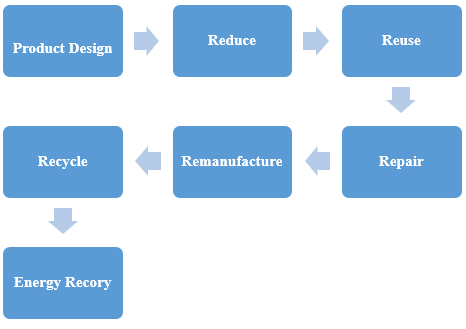
Instead of treating products as disposable, it aims to maximize the value of materials by keeping them in circulation for as long as possible through strategies such as:
Designing products for durability
Reducing material consumption
Reusing products
Repairing damaged products
Refurbishing and remanufacturing
Recycling materials at the end of their useful life
Within this framework, recycling is not the starting point—it is one of the final strategies used after opportunities for reuse, repair, or refurbishment have been exhausted.
The ultimate objective is not simply to recycle more materials but to reduce reliance on virgin resources while maximizing the lifetime value of existing materials.
For manufacturers, adopting circular economy principles offers benefits beyond environmental protection. It enhances resource efficiency, improves resilience against raw material price fluctuations, supports long-term sustainability goals, and strengthens competitiveness within increasingly demanding global supply chains.
A Practical Example
Consider a manufacturer producing sports apparel using 100 tons of recycled polyester fiber.
Most international buyers will not simply ask:
"Are you using recycled materials?"
Instead, they are more likely to ask:
Which supplier provided the recycled polyester?
Can the supplier verify the recycled origin?
How is recycled material separated from virgin material during production?
What percentage of recycled content remains in the finished garments?
Is every production batch fully traceable?
Without a documented management system, answering these questions becomes extremely difficult—even if the manufacturer genuinely uses recycled materials.
This is precisely why internationally recognized standards such as the Global Recycled Standard (GRS) and the Recycled Claim Standard (RCS) have become increasingly important. Rather than simply confirming that recycled materials are used, these standards provide independent verification of recycled content, establish robust Chain of Custody requirements, and enhance transparency throughout the entire supply chain.
Is Using Recycled Materials Alone Enough?
One of the most common misconceptions among manufacturers is that purchasing recycled raw materials automatically qualifies their products as "recycled products."
In reality, using recycled materials is only the starting point.
What international buyers and certification bodies expect is not merely the use of recycled inputs, but the ability to demonstrate and verify every sustainability claim with credible evidence.
For example, companies should be able to answer questions such as:
Who supplied the recycled materials?
Can the supplier provide valid evidence supporting the recycled origin?
How are recycled and virgin materials managed during production?
Is there a documented system preventing unintended mixing?
What percentage of recycled content remains in the finished product?
Can every production batch be traced back through documented records?
Without a structured management system, businesses may struggle to substantiate their sustainability claims—even when recycled materials are genuinely used throughout production.
This is why internationally recognized certification schemes evaluate not only the product itself but also the management system behind it.
Why Have GRS and RCS Become Global Industry Standards?
As the demand for recycled materials continues to grow, businesses need reliable and internationally recognized methods to verify recycled content.
Without independent verification, sustainability claims can easily become misleading, resulting in reduced customer confidence and increasing concerns about greenwashing.
To address this challenge, Textile Exchange developed two globally recognized certification standards:
Global Recycled Standard (GRS)
Recycled Claim Standard (RCS)
Although both standards verify recycled materials, they serve different purposes.
The Recycled Claim Standard (RCS) focuses primarily on verifying recycled content and ensuring traceability throughout the supply chain. It is an appropriate choice for organizations seeking to validate recycled material claims in their products.
The Global Recycled Standard (GRS) goes significantly further.
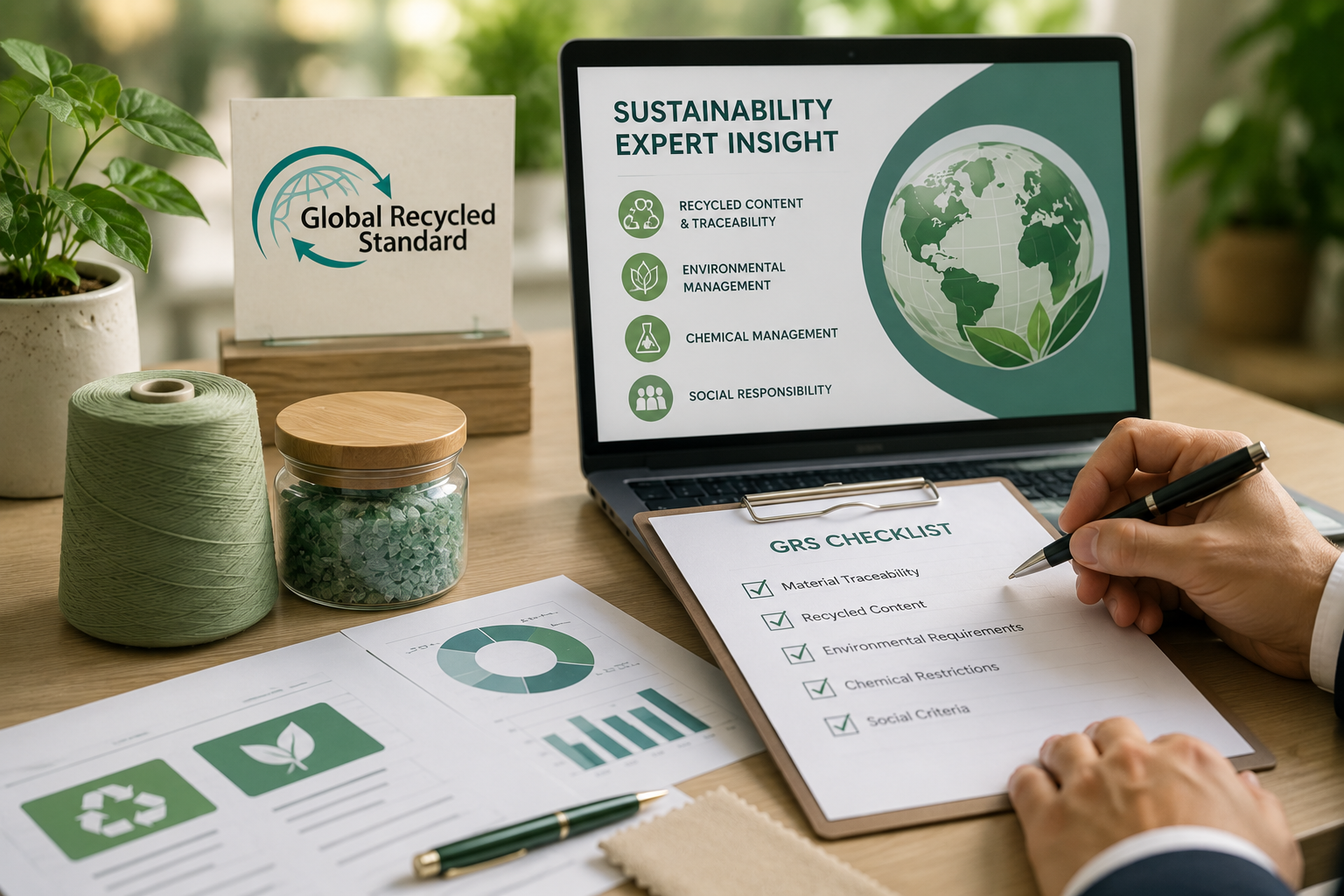
In addition to verifying recycled content and Chain of Custody requirements, GRS evaluates:
Environmental management practices
Chemical management
Social responsibility requirements
Management systems supporting sustainable production
For organizations aiming to demonstrate comprehensive sustainability performance, GRS provides a broader framework that extends beyond material verification alone.
Common Misconceptions About Recycled Materials
During sustainability consulting and certification projects, several misconceptions are frequently encountered.
"Using recycled materials automatically means we comply with GRS."
Not necessarily.
Using recycled materials is only one requirement. Certification also requires documented management systems, traceability, proper record keeping, and compliance with additional environmental and social criteria, depending on the applicable standard.
"Purchase invoices are sufficient evidence."
Purchase invoices confirm commercial transactions but do not prove recycled origin.
Organizations are generally expected to maintain supporting documentation from suppliers, internal material records, production documentation, and traceability evidence throughout the entire manufacturing process.
"Recycling only benefits the environment."
While environmental benefits are significant, recycled materials also create measurable business value.
Organizations adopting recycled materials often strengthen customer confidence, improve brand reputation, enhance ESG performance, and increase opportunities to participate in international supply chains.
"Only exporters need recycled material certification."
This perception is rapidly changing.
As sustainability expectations continue to expand globally, many domestic manufacturers are preparing their management systems well before entering export markets.
Establishing a transparent recycled material management system today helps organizations remain competitive and future-ready regardless of their current customer base.
Expert Insight from TTS Cert
Based on our experience supporting manufacturers across various industries, one challenge appears consistently.
The greatest obstacle is rarely sourcing recycled materials.
Instead, it is building a management system capable of demonstrating compliance.
Many manufacturers have already incorporated recycled materials into production for years. However, they often lack documented procedures for material segregation, supplier verification, inventory control, traceability, or Material Balance calculations.
As a result, when customers or certification bodies request supporting evidence, businesses may find it difficult to demonstrate compliance despite operating responsibly.
A well-designed management system not only facilitates certification but also improves operational efficiency, reduces business risks, and strengthens long-term customer confidence.
For many organizations, certification becomes the outcome of an effective management system—not the objective itself.
Conclusion
Recycled materials are becoming an increasingly important component of modern manufacturing and sustainable supply chains.
However, simply incorporating recycled materials into production is no longer enough.
Organizations are expected to demonstrate transparency, traceability, and credible verification throughout the entire production process.
This is precisely where internationally recognized standards such as GRS and RCS create value.
By implementing appropriate management systems and obtaining independent certification, businesses can strengthen customer confidence, improve supply chain transparency, enhance ESG performance, and gain greater access to international markets.
At TTS Cert, we support organizations throughout every stage of this journey—from gap assessments and management system development to employee training, documentation preparation, and certification support with internationally recognized certification bodies.
With extensive experience supporting manufacturers across multiple industries, our consultants are committed to delivering practical, efficient, and value-driven solutions tailored to each organization's sustainability objectives.
Whether your company is beginning its sustainability journey or preparing for GRS or RCS certification, TTS Cert is ready to help you build a transparent, credible, and future-ready supply chain.
Frequently Asked Questions
What are recycled materials?
Recycled materials are materials recovered from post-consumer products or manufacturing waste and processed for use as raw materials in new production cycles.
What is the difference between recycled materials and recycled content?
Recycled materials refer to the raw materials themselves, while recycled content represents the percentage of recycled material contained within the final product.
Does using recycled materials automatically qualify a product for GRS certification?
No. GRS certification also requires compliance with Chain of Custody, environmental management, chemical management, social responsibility, and documented management system requirements.
What is the difference between GRS and RCS?
RCS verifies recycled content and traceability, whereas GRS includes additional environmental, chemical, social, and management system requirements.
What is Chain of Custody?
Chain of Custody is a documented management system that tracks materials throughout the supply chain, ensuring transparency and traceability from raw material to finished product.
What is Material Balance?
Material Balance is an accounting methodology used to ensure that the quantity of recycled input corresponds to the recycled claims made for finished products.
Which industries commonly use recycled materials?
Recycled materials are widely used in textiles, plastics, packaging, paper, furniture, automotive manufacturing, electronics, and construction.


