

Halal Certification – A Great Opportunity for Vietnamese Businesses
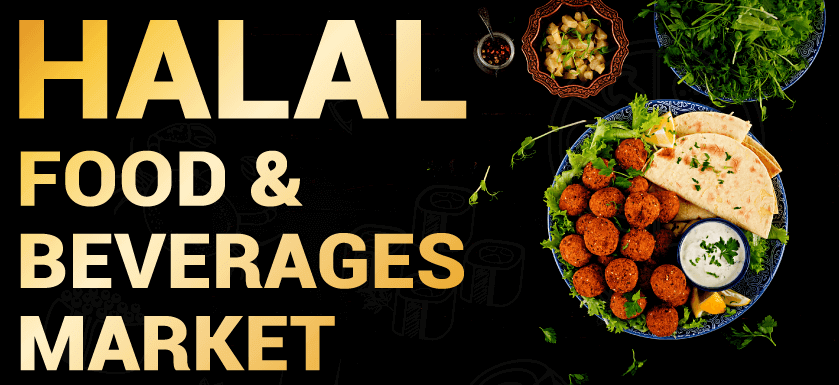
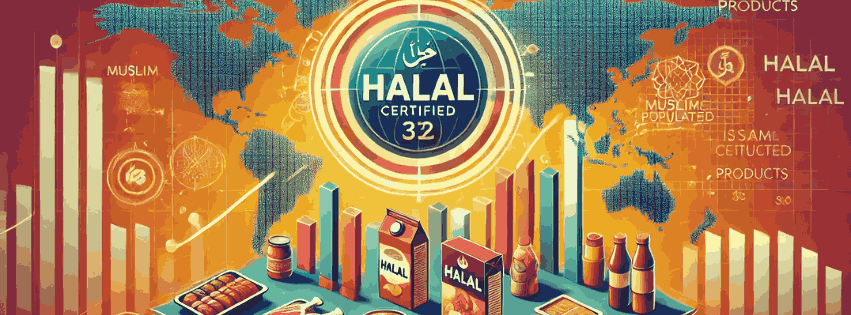
Recently, Halal certification has been attracting significant attention from Vietnamese businesses. With the rapid growth of the global Muslim population, it is projected that by 2025, Halal food will account for 20% of the total global food consumption value.
To obtain Halal certification, Vietnamese businesses must meet numerous strict requirements. However, there are 3 key conditions that determine whether Halal certification is granted:
- Only using Halal ingredients (not prohibited by Islamic law)
- Animal-derived ingredients must have Halal certification
- No cross-contamination between Halal and Haram production lines
TTS-CERT will explain each of these conditions in detail to help businesses proactively comply and quickly achieve Halal certification.
Condition 1: No Use of Haram Ingredients
What are Halal and Haram?
- Halal (حلال) in Arabic means "lawful" or "permitted."
- Haram (حرام) is the opposite of Halal, meaning "unlawful," "forbidden," or "prohibited."
To produce Halal-compliant products, businesses must:
- Use clear sources of ingredients that are not prohibited by Islamic law (i.e., not Haram).
- Provide complete documentation on the ingredients’ composition and origin.
During processing, storage, and transportation:
- Products must not come into contact with any prohibited substances under Islamic law.
- Alcohol must not be used in any form to be directly added to products.
- Equipment or tools made from prohibited materials must not be used.
Condition 2: Animal-Derived Ingredients Must Have Halal Certification
Non-Halal animal-derived ingredients include:
- Pigs, dogs, monkeys, snakes, and wild animals.
- Birds of prey like eagles and vultures.
- Amphibians such as frogs and crocodiles.
- Sea creatures without scales (toxic or harmful).
- Animals not slaughtered according to Islamic law.
- Blood and products containing blood.
- Carnivorous animals with claws and fangs like lions, tigers, and bears.
- Pests like rats and scorpions.
- Animals prohibited from being killed such as ants, bees, and woodpeckers.
Halal animals include: goats, sheep, cows, deer, chickens, ducks... provided they are slaughtered according to Shari’ah law.
Note:
- All animal-derived ingredients, such as meat and poultry, must have Halal certification.
- Certifications like GlobalGAP, HACCP, ISO 22000 are also highly recommended.
Condition 3: No Cross-Contamination Between Halal and Haram Production Lines
During production and processing:
- Separate production areas for Halal and Haram products.
- Dedicated staff for each area to prevent cross-contamination.
- Separate equipment and machinery clearly marked for Halal or Haram use.
If equipment previously used for Haram products is to be reused:
- It must be cleaned according to Islamic rites before being used for Halal products.
If the business also produces Haram products (e.g., pork, dog meat):
- There must be completely separate factories for Haram and Halal products.
- Muslim supervisors (1 per production shift) are required to ensure compliance with Islamic law.
Halal Certification Process
Step 1: Register for Halal Certification
- Businesses choose the appropriate certification program: Halal Jakim, GCC, or Halal Mui depending on the target export market.
Step 2: Contract Signing
- The certification body will review documents, provide cost estimates, and schedule assessments.
Step 3: Document Review (Stage 1)
- Auditors will conduct a preliminary review of documents before conducting on-site assessments.
Step 4: On-site Assessment (Stage 2)
- The certification body will evaluate the production facility according to international Halal standards such as MS 15000:2019, GSO 2055-1, MUI.
Step 5: Review and Issuance of Halal Certification
- After the business addresses any non-conformities (if any) and submits adequate evidence, Halal certification will be issued.
- The business must maintain the validity of the Halal standard throughout the production process.
Finding a Reputable Halal Certification Body in Vietnam
ACTS is a leading global Halal certification service provider. The ACTS Halal logo is globally recognized for its credibility, quality, and food safety.
If your business is exploring or needs consultation on Halal certification, contact TTS-CERT for detailed support.
Conclusion
We hope this article provides you with a clear understanding of Halal certification requirements and processes. To seize significant opportunities in the international market, prepare thoroughly and choose a reputable certification partner!


