


THE NEED FOR GREENING THE TEXTILE AND GARMENT INDUSTRY
The textile and garment industry is one of Vietnam's key industries, providing jobs for over 3 million workers and showing strong growth momentum. Global textile production nearly doubled from 2000 to 2015, and clothing and textile consumption is expected to increase by 63% by 2030, reaching 102 million tons from the current 62 million tons. However, this industry is also a high carbon emitter, and its growth comes with serious environmental and sustainability challenges.
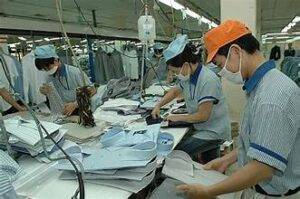
Textile production, including cotton cultivation, uses about 93 billion cubic meters of water annually, accounting for about 4% of global freshwater withdrawal. Additionally, 20% of global industrial water pollution originates from dyeing processes, a crucial link in the textile supply chain. According to an EU study, the textile industry ranks fourth among industries with the most negative environmental and climate impacts and third in water and land use. In the EU, about 5.8 million tons of discarded clothing are generated annually, equivalent to about 11 kg per person. Textile production also consumes energy for operating various equipment, generating steam and heat for different processing stages. In Vietnam, the textile and garment industry accounts for about 8% of the total energy demand of the entire industrial sector and emits around five million tons of CO2 annually. Additionally, wet processing stages (such as washing, rinsing, pretreatment, and dyeing) consume large amounts of water and various chemicals that must be treated before discharge into the environment.
Therefore, greening the production chain in the textile industry is a global trend that businesses must follow to meet specific requirements from buyers and enjoy tariff incentives under new-generation trade agreements such as EVFTA, CPTPP, etc. Mr. Tran Nhu Tung, Chairman of Thanh Cong Textile - Investment - Trading Joint Stock Company, stated that sustainability requirements, including environmental factors, have long been demanded by customers. Over the past five years, the pressure has intensified, especially from European and American buyers. This direct pressure drives businesses to transform.
THE IMPACT OF GREEN CERTIFICATION ON EXPORT TURNOVER
Vietnam's textile and garment export turnover in 2022 reached 44.7 billion USD, up 10.6% year-on-year, but growth slowed in the final months and continued into the present. Vietnam holds the third position among the world's largest textile exporters, after China (323 billion USD) and Bangladesh (45.7 billion USD). Notably, Bangladesh's textile export turnover in 2022 grew by nearly 26% compared to 2021, reclaiming the second position, which Vietnam held in 2021.
From mid-2022 to Q1 2023, Bangladesh's textile export turnover increased by 14% in the European market and 35% in non-traditional markets. Bangladesh achieved five consecutive months of positive growth, only slowing from March 2023. In contrast, Vietnam's textile export turnover in the first five months of 2023 reached 14.5 billion USD, down 21% year-on-year. The optimistic factor is that high-end products accounted for 85% and increased by over 10% compared to last year.
The contrasting performance between Bangladesh and Vietnam raises the question: Why is Bangladesh's textile industry thriving despite the global economic downturn and inflation? Mr. Tung, also Vice Chairman of Vitas, noted, "Bangladesh received more orders because they focus on green development." Bangladesh has hundreds of factories certified with LEED Platinum, whereas Vietnam has only a few, mainly from FDI enterprises.
Vietnam's textile industry faces many challenges to truly achieve "greening." Companies that wish to transition must balance financial equations, as green investments do not yield immediate results but directly impact profit margins, shareholder dividends, and even stock prices. Since 2018, Bangladesh has invested heavily in green production technologies to meet the highest standards. As a result, by 2022, about 85-90% of garment factories in Bangladesh met LEED Platinum standards, the highest green production certification awarded by the U.S. Green Building Council.
THE PATH TO GREEN TRANSITION
In Vietnam, factories achieving LEED certification are mainly from FDI companies or large-scale firms such as Viet Tien, the leading textile exporter with annual revenues of 8,000-9,000 billion VND. Complying with LEED standards requires substantial financial and human resource investments to meet strict criteria, such as fresh air volume, green space per employee, and paint colors to minimize psychological stress on workers. This presents a financial and operational dilemma, as existing factories must continue operating, paying wages without completely shutting down to meet LEED standards.
However, for long-term survival, businesses must transition as competitive pressure and the risk of obsolescence loom closer. In reality, textile companies face increasing pressure to "green" their production processes to meet buyers' requirements and retain orders. Currently, over 250 global fashion brands have set environmental responsibility standards and codes of conduct for their suppliers.
In the long run, 65% of consumers are shifting from fast fashion to basic and durable clothing, and 67% are increasingly concerned about the environmental and social sustainability of fashion brands. This consumer pressure drives brands to commit to and take action to improve sustainability throughout their supply chains. Additionally, businesses participating in greening and the circular economy receive government support in terms of market access, preferential loans, creating better, greener, and healthier working environments.
Vietnam's textile industry is among the 20 economic sectors that the State Bank of Vietnam guides financial institutions to evaluate environmental risks when granting credit under the Handbook on Environmental and Social Risk Assessment, issued in August 2018. Therefore, the textile industry must build a development strategy towards green production, environmental protection, and meeting the criteria for green investment projects under the Environmental Protection Law, serving as a basis for accessing effective green credit policies.
In conclusion, "greening" is a mandatory requirement for every business, especially in the textile industry, to adapt, evolve, and thrive in a globally integrated and sustainably developed world.


