


C-TPAT STANDARD: INTERNATIONAL SUPPLY CHAIN SECURITY
In today’s strong trend of global integration, businesses have more opportunities than ever to expand into potential international markets. Along with this growth, global trade also brings significant risks related to international cargo security. C-TPAT (Customs-Trade Partnership Against Terrorism) was established as an essential tool helping companies minimize supply chain security risks, enhance credibility, and gain advantages when entering major markets such as the United States.
1. WHAT IS C-TPAT?
C-TPAT stands for Customs-Trade Partnership Against Terrorism – a voluntary security program led by the U.S. Customs and Border Protection (CBP) to strengthen international supply chain and border security.
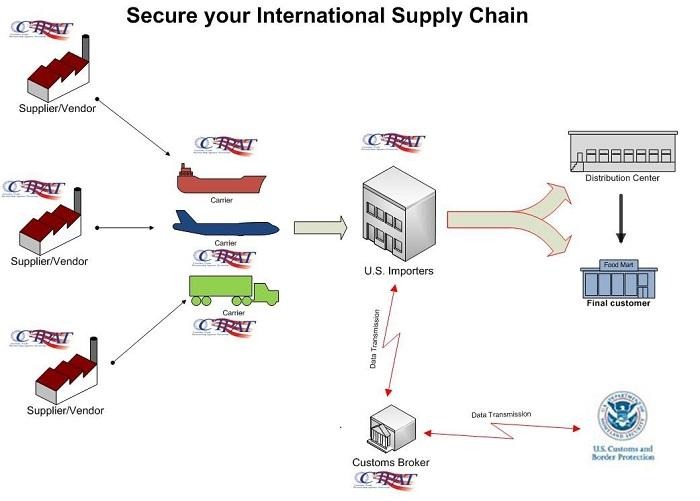
This U.S. government–business initiative promotes cooperation between government authorities and companies to enhance global supply chain security. Through the program, CBP sets out security practices for operations and communication, while also verifying the security compliance of business partners throughout the supply chain.
2. HISTORY OF C-TPAT
The C-TPAT program is closely associated with the United States’ heightened focus on security following the rapid growth of imports and exports. After the 9/11 attacks—an event that shocked the nation and claimed nearly 3,000 lives—the U.S. government recognized an urgent need to strengthen anti-terrorism measures and safeguard its borders.
In response, CBP launched the voluntary partnership program known as C-TPAT. Its main objective is to secure the entire supply chain—from overseas suppliers to U.S. consumers.
As a partner supporting companies exporting goods to the U.S. from abroad, we assist manufacturers, exporters, logistics providers, and other supply chain stakeholders in achieving successful C-TPAT certification.
3. THE IMPORTANCE OF C-TPAT FOR SUPPLY CHAIN SECURITY
Every year, more than 20 million shipments enter the United States through sea, air, road, and rail transport. Such high volumes and diverse transportation methods pose risks including terrorism, smuggling, and organized crime.
From only 7 founding members, C-TPAT has grown to more than 11,400 members, representing 52% of the total value of U.S. imports. With its vision of expanding global security, C-TPAT aims to cover nearly 100% of commercial cargo entering the U.S., becoming a strategic tool for border protection and supply chain risk mitigation.
4. WHO IS ELIGIBLE TO JOIN C-TPAT?
According to CBP, 12 types of business entities are eligible to become C-TPAT members:
Importers
Exporters
Air carriers
Highway carriers
Mexican long-haul carriers
Rail carriers
Sea carriers
Third-party logistics providers (3PL)
Consolidators
Customs brokers
Foreign manufacturers
Port authorities and terminal operators
5. C-TPAT MINIMUM SECURITY CRITERIA
C-TPAT includes core security requirements related to business partners, cargo handling, physical security, and operational controls.
1. Business Partner Requirements
Companies must assess and screen all business partners to ensure compliance with C-TPAT security criteria. Records such as photos, inspection logs, and verification reports must be maintained.
2. Container and Trailer Security
Companies must conduct seven-point container inspections and ensure that all transport vehicles are equipped with GPS or monitoring systems.
3. Access Control
Businesses must define who is allowed access to their premises—including employees, visitors, vendors, and partners—and maintain systems to manage and document entry/exit.
4. Personnel Security
Background checks, employment history verification, reference checks, and drug tests are essential to prevent internal threats.
5. Physical Security
Facilities must be protected with security cameras, alarms, fences, lighting, and controlled entry points for people and vehicles.
6. Information Technology Security
Companies must strengthen cybersecurity, protect data, prevent unauthorized access, and implement incident response measures for cyberattacks.
7. Security Training & Threat Awareness
Employees must be trained regularly on supply chain risks, internal threat recognition, and access control procedures.
8. Security Procedures
Documented security policies must be established and maintained, with a designated responsible person to ensure continuous compliance.
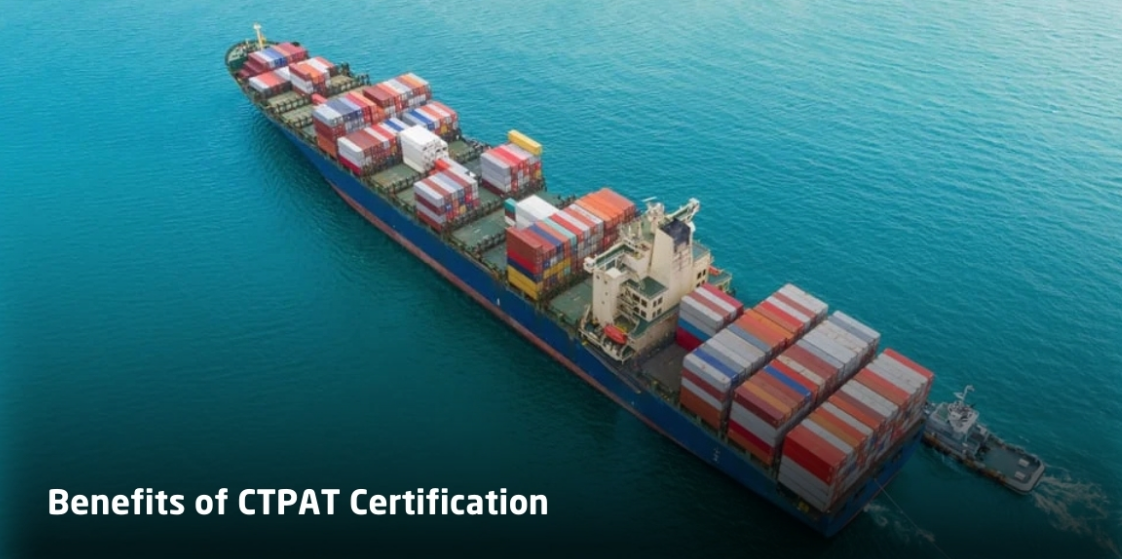
6. BENEFITS OF JOINING THE C-TPAT PROGRAM
Although C-TPAT is voluntary, it provides significant advantages to importers, exporters, logistics providers, and manufacturers with international supply chains.
Key benefits include:
Reduced cargo inspections at U.S. ports of entry
Faster and more efficient customs clearance
Access to the C-TPAT Portal and global training resources
Eligibility for the Free and Secure Trade (FAST) program
Priority re-entry after natural disasters or security incidents
Eligibility for other U.S. government pilot programs
Supply chain security specialists designated by CBP
Opportunities to participate in the Importer Self-Assessment (ISA) Program
Certification timeline: CBP has up to 90 days to certify or reject an application. Once certified, a company must undergo revalidation every three years.
7. RISKS FOR BUSINESSES THAT DO NOT IMPLEMENT C-TPAT
Failing to implement C-TPAT may lead to several challenges:
1. Higher initial and operational costs
Businesses without C-TPAT often face higher security-related costs and delays.
2. Increased compliance pressure
Ongoing documentation, training, and audits require strong commitment and resources.
3. Risk of failing assessments
Non-compliance may result in suspension, rejection, or mandatory corrective actions—affecting production and export timelines.
4. Dependency on supply chain partners
If a partner fails to meet security criteria, the entire chain may face disruptions or loss of credibility.
C-TPAT is not only a supply chain security framework but also a gateway to global trade advantages—reducing inspection frequency, optimizing logistics costs, improving trust, and strengthening business resilience.
8. OUR CLIENTS
With a highly experienced team, we successfully supported HW Energy—an FDI company with over 1,000 billion VND in investment—in achieving C-TPAT certification in its major project in Hai Phong. This accomplishment highlights the commitment of both parties to maintaining strong security and compliance in global supply chains.

9. FREQUENTLY ASKED QUESTIONS ABOUT C-TPAT
1. What is C-TPAT? A voluntary partnership program between businesses and U.S. CBP to enhance supply chain security and prevent terrorism, smuggling, and trade fraud.
2. Who should join C-TPAT? Manufacturers, exporters, logistics providers, carriers, warehouse operators, and businesses trading with U.S. partners.
3. Is C-TPAT mandatory? No, but it is a key requirement for many U.S. brands and importers.
4. How often is C-TPAT assessed? Companies must update their profiles annually. External validations typically occur every 1–3 years.
5. How does C-TPAT differ from SMETA or ISO?
C-TPAT: Supply chain security
SMETA: Social responsibility and ethical trade
ISO: Various standards (quality, environment, safety, etc.)
6. What are the benefits of achieving C-TPAT certification? Reduced inspections, priority processing, stronger credibility, and safer supply chain operations.
10. IMPORTANT NOTES FOR C-TPAT AUDIT PREPARATION
1. Prepare full documentation
Supply chain security policies
Training records and security inspection reports
Photos, evidence, procedures, incident logs
2. Ensure facility physical security
Fences, gates, locks, lighting, camera systems
Use ISO 17712–compliant seals
Access control for people and vehicles
3. Strengthen personnel and contractor security
Clear hiring procedures
Background checks
Regular security training
Controlled access cards and restricted zones
4. Enhance transportation and cargo security
Supplier evaluations
Seven-point container inspection
Monitoring, reporting, and incident handling
5. Communication and continuous improvement
Maintain communication with supply chain partners
Conduct annual internal reviews and corrective actions


