
SERVICE

GSV Audit: 12 Security Criteria, Checklist and Audit Process

Practical GSV preparation for exporting factories: 12 security categories, departmental evidence, site checks, Intertek results and TTS Cert consulting.

Global Security Verification (GSV) is a supply chain security audit programme operated by Intertek. It helps suppliers and importers assess controls designed to protect cargo, transport operations, facilities, personnel and information against unauthorised access, tampering, theft and other cross-border security risks.

For exporting factories in Vietnam, the trigger is often a buyer's compliance requirement. Before booking an audit, the facility should confirm which programme the buyer accepts, which site is in scope, what report is required and when the result must be submitted. A general request for “security certification” is not enough to determine that a GSV audit is the correct solution.

This guide covers the 12 GSV 2.0 criteria, a department-by-department document checklist, practical site checks, the distinction between a GSV report and a so-called “GSV certificate”, and how to prepare for Intertek's assessment. TTS Cert provides independent consulting and readiness support; official audit decisions and programme documents remain within Intertek's process.

1. What Is GSV and Which Facilities Need an Audit?

GSV stands for Global Security Verification. According to Intertek's official programme overview, it uses a consistent assessment, scoring and reporting approach to help trading partners identify and reduce supply chain security risks. Intertek also describes opportunities to share verification information under programme arrangements, potentially reducing duplicate audits.

The programme draws together security practices associated with CTPAT, Canada's Partners in Protection (PIP) and Authorized Economic Operator (AEO) frameworks. A GSV audit does not automatically make a Vietnamese factory a CTPAT member or grant it AEO status.

Facility or businessPossible reason for a GSV audit
Export manufacturers – textiles, footwear, electronics, home goods, packaging and othersBuyers request evidence of security at the manufacturing, packing or dispatch site
Factories loading international shipping containersBuyers want assurance about container inspection, seal control and secure cargo loading
Warehouses and distribution facilitiesSecurity risks arise around storage, access, dispatch and custody transfers
Factories using carriers, subcontractors or off-site warehousesThird parties affect cargo integrity beyond the main factory boundary
Suppliers receiving similar requests from multiple importersThe buyer may accept shared verification evidence, subject to programme rules and its own conditions

GSV is not a general operating licence mandated by Vietnamese law. The need for an audit is driven by customer terms and the facility's risk profile. Existing security records may already support parts of the assessment; reviewing those records first is more effective than recreating an entire documentation system.

2. The 12 GSV 2.0 Security Criteria

Intertek announced GSV 2.0 on 22 April 2020, aligning its programme with updated CTPAT Minimum Security Criteria. Its official release identifies 12 security categories. Cybersecurity, agricultural security and management-level security responsibility were specifically highlighted among the newer areas. This article uses the publicly verified GSV 2.0 framework, rather than inventing a “GSV 2026” revision.

#Official GSV 2.0 categoryExample of factory-level evidence
1Security vision and responsibilitySecurity policy, leadership responsibility, resources and assigned ownership
2Risk assessmentDocumented evaluation of supply chain routes, partners, locations and changing threats
3Business partner securityRisk-based screening and monitoring of carriers, contractors and outsourced facilities
4CybersecurityAccount access, authentication, permissions, backups and incident response
5Conveyance and instruments of international traffic securityContainer and conveyance inspection before loading
6Seal securitySecure seal storage, authorised issue, application and reconciliation
7Procedural securityCargo documentation, loading checks, discrepancy management and handovers
8Agricultural securityControls against pests, contamination and organic debris affecting cargo or containers
9Physical securityPerimeter, gates, locks, CCTV, lighting and sensitive-area protection
10Physical access controlsEmployee identification, visitor logs, vehicle access and restricted areas
11Personnel securityLawful screening, role changes, terminations and removal of access rights
12Education, training, and awarenessSecurity awareness training, incident reporting and practical response exercises

These are the publicly listed categories with practical examples, not a reproduction of Intertek's proprietary audit questionnaire. The actual audit requirements must be confirmed against the programme material provided for the facility's assessment.
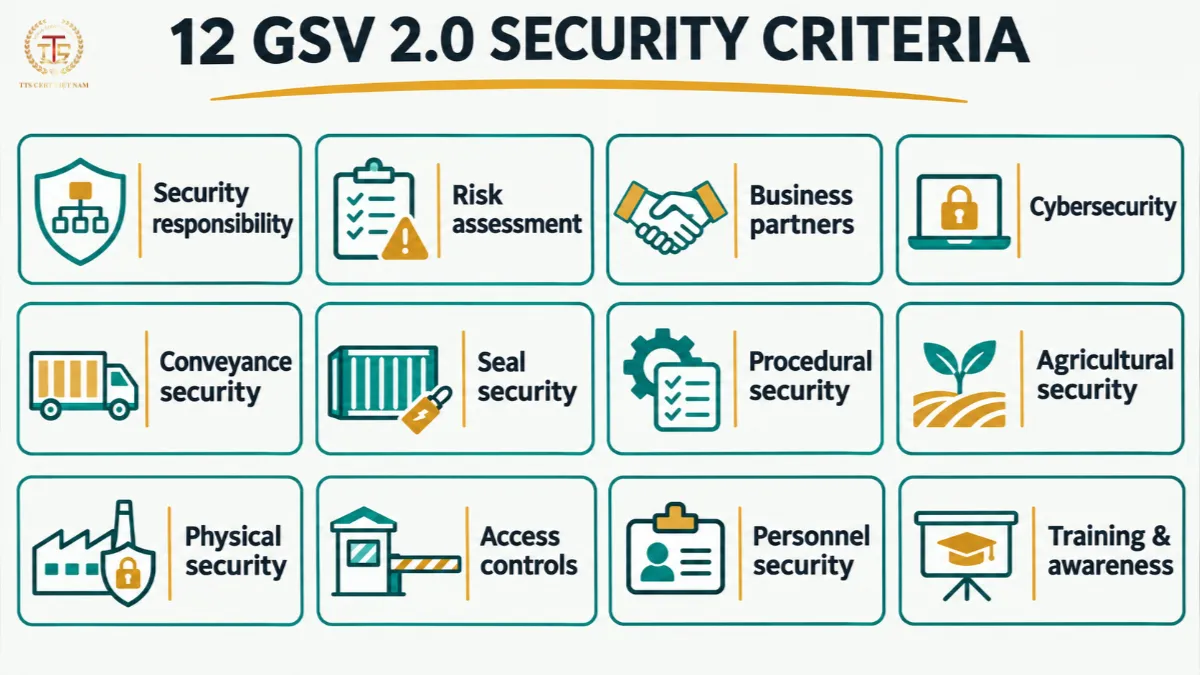
nfographic listing all 12 GSV 2.0 security criteria

3. GSV Certificate vs Audit Report: What Does Intertek Issue?

People often search for “GSV certificate” or “GSV certification”, but the terminology should not obscure the actual programme deliverable.

  • GSV audit or verification report: the key assessment document, potentially identifying the site, audit date, scope, scores, findings and follow-up requirements according to programme arrangements.

  • Achievement Award or Record of Participation (ROP): Intertek's publicly available supplier-audit programme information refers to forms of achievement or participation recognition. Whether a particular GSV facility qualifies, which format is issued and under what current conditions must be confirmed with Intertek.

  • Accredited ISO management-system certificate: a different type of assurance. A GSV report or participation record is not automatically an accredited ISO certificate, CBP CTPAT membership or customs AEO authorisation.

The right question is what evidence the buyer will actually accept. Check whether the customer wants an official GSV report, another form of Intertek programme record, or proof under a different security scheme. Avoid promising a “GSV certificate” before the exact document type, acceptance conditions and issue process are confirmed.

Intertek's Global Supply Chain Compliance platform overview describes performance reporting, scoring, corrective-action tools and supplier achievement mechanisms. It does not establish a universal 2026 passing score, fee or validity period for every GSV facility.
4. GSV Audit Document Checklist by Department

Audit readiness depends on more than written policies. A useful evidence file shows what is required, who performs the control and what recent records prove it works. The checklist below helps a facility prepare internally, but it is not an official Intertek question set.

DepartmentRecords and evidence to prepareUseful cross-check
Leadership / complianceSecurity policy, responsibilities, risk assessments, review records and improvement prioritiesDo risks reflect actual shipping routes, service partners and locations?
Security / administrationAccess procedures, visitor and vehicle registers, badges, CCTV checks, perimeter maintenance and incident recordsCan the logs be linked to real shipment or incident dates?
Warehouse / shippingCargo flow map, container inspection records, loading logs, seal inventory, dispatch and handover documentsCan a shipment be traced from inventory to the sealed container?
Human resourcesHiring checks permitted by law, badge issue/recovery, personnel changes and security trainingAre departed employees' physical and digital permissions removed promptly?
Information technologyAccount list, access permissions, backup records, security incidents and data handling rulesAre shared or inactive accounts and sensitive shipping data protected?
Purchasing / logisticsCarrier selection, contractor due diligence, external warehouse controls and incident escalationDo assessments cover the third parties that actually handle cargo?
Training / internal auditAttendance, awareness tests, findings, corrective actions and effectiveness checksCan operational staff explain and demonstrate their own security duties?

One-shipment traceability test: Select a completed dispatch and match the dispatch instruction, truck/driver entry, container inspection, seal number, shipping document and available surveillance or custody-transfer records. Investigate any gap instead of retroactively fabricating evidence.

The site should also control document versions and retention periods according to buyer and programme requirements. Do not claim that a record is mandatory for every facility simply because it appears in a preparation example.

5. Practical GSV Site Readiness Checks

An effective readiness walk should take place while cargo operations are running, not just when the site is quiet. Include representatives from warehouse operations, security, administration, IT and management.

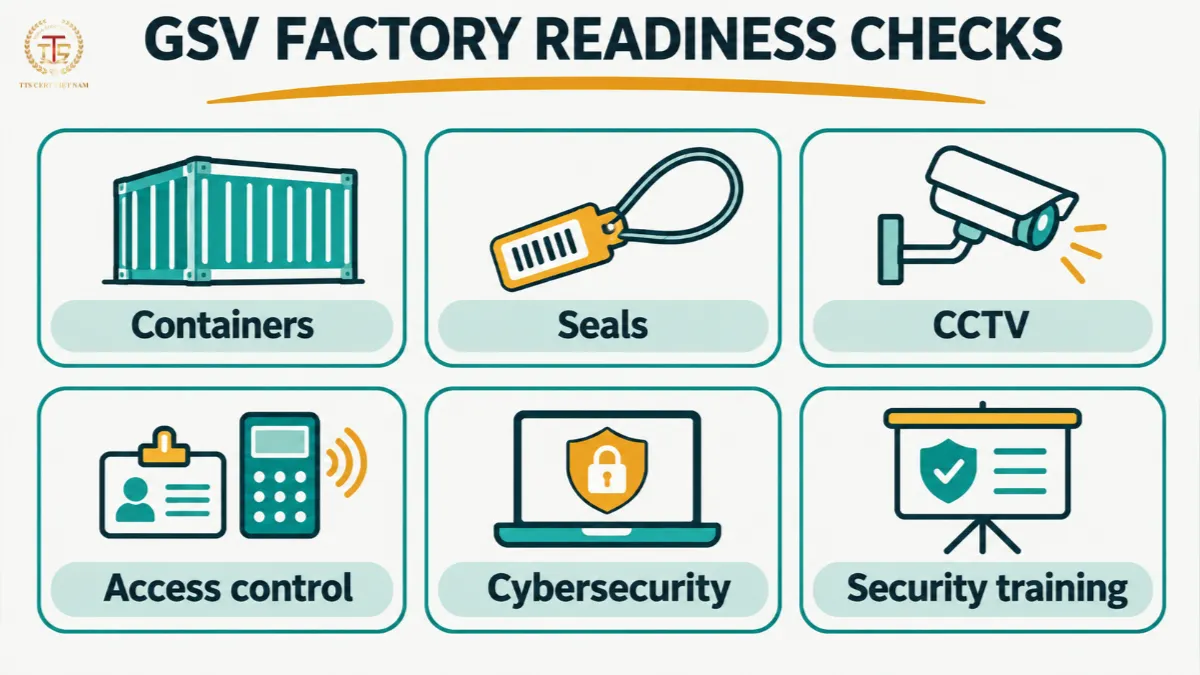
Container and loading-zone controls. Observe whether trained personnel inspect containers or relevant conveyances before loading, record irregularities and protect the container from unauthorised interference. Review inspection methods appropriate to the equipment and the customer's requirements, along with the security of the staging area.

Seal control. Check restricted storage, authorised issue, numbered seal logs, application, verification and reconciliation against dispatch documents. If the buyer requires high-security seals, verify the specified standard and evidence of conformity. The system must control the seal from receipt through use, not merely purchase a compliant product.

CCTV and physical access. Verify coverage of the loading bay, main access points and other critical areas; test footage retrieval on a selected date. Observe how visitors, drivers, contractors and employees are identified, approved and supervised. Emergency exits must remain safe and compliant; do not create fire hazards in the name of security.

Cybersecurity. Check inactive users, password and access rules, secure handling of shipping records, backups and incident reporting. Security screening and employee data collection must remain lawful and proportionate.

Agricultural security. Look for pest activity, organic debris and contamination risks around containers and cargo-storage areas. This category is relevant to shipment integrity beyond agricultural product manufacturers.

Response drill. Ask staff to demonstrate the escalation process when seal numbers do not match, an unauthorised person enters a loading zone or a critical camera fails. Real response capability matters more than memorised answers.

Six practical GSV factory site checks covering containers, seals, CCTV, access, cybersecurity and training

6. GSV Audit Process: Registration to On-Site Review

A GSV audit should follow the buyer's requirements and Intertek's programme arrangements. A factory's internal inspection is helpful preparation but is not a substitute for the official audit or any issued programme report.

StageFacility actionExpected output
1. Clarify the requestConfirm the buyer, facility, programme, scope, reporting obligations and due dateAgreed audit requirements
2. Contact IntertekConfirm registration route, quotation, audit capacity, duration and reporting processAudit plan and commercial arrangements
3. Conduct a gap reviewCompare existing records and conditions against the 12 GSV 2.0 categoriesPrioritised gap list and action owners
4. Implement and trainImprove actual controls, document operation and train responsible personnelWorking evidence, not just templates
5. Complete the official auditSupport file review, interviews, facility observations and transaction checksIntertek programme assessment results
6. Address findings and receive resultsInvestigate gaps and submit corrective evidence where requiredOfficial report or other eligible programme record, as determined by Intertek

Make sure site boundaries and outsourced activities are clear. A company's use of shared policies does not automatically bring all warehouses, loading sites or subcontractors into a single assessment scope.

For urgent buyer deadlines, TTS Cert may prioritise the highest-risk controls and combine relevant training and evidence review activities. Intertek remains responsible for official audit scheduling, assessment decisions and report issuance.

7. How to Interpret GSV Scores and Audit Reports

Intertek describes a consistent GSV scoring methodology, while its supply-chain compliance platform supports tracking results and corrective actions. This does not mean that all buyers have identical acceptance thresholds or that an old scoring example can be used to promise a passing result.

Review the report in four layers:

  1. Scope and identity: legal entity, audited location, activities, date and programme reference details.

  2. Assessment outcome: the score or result presentation applicable to the report, audit observations and related security risks.

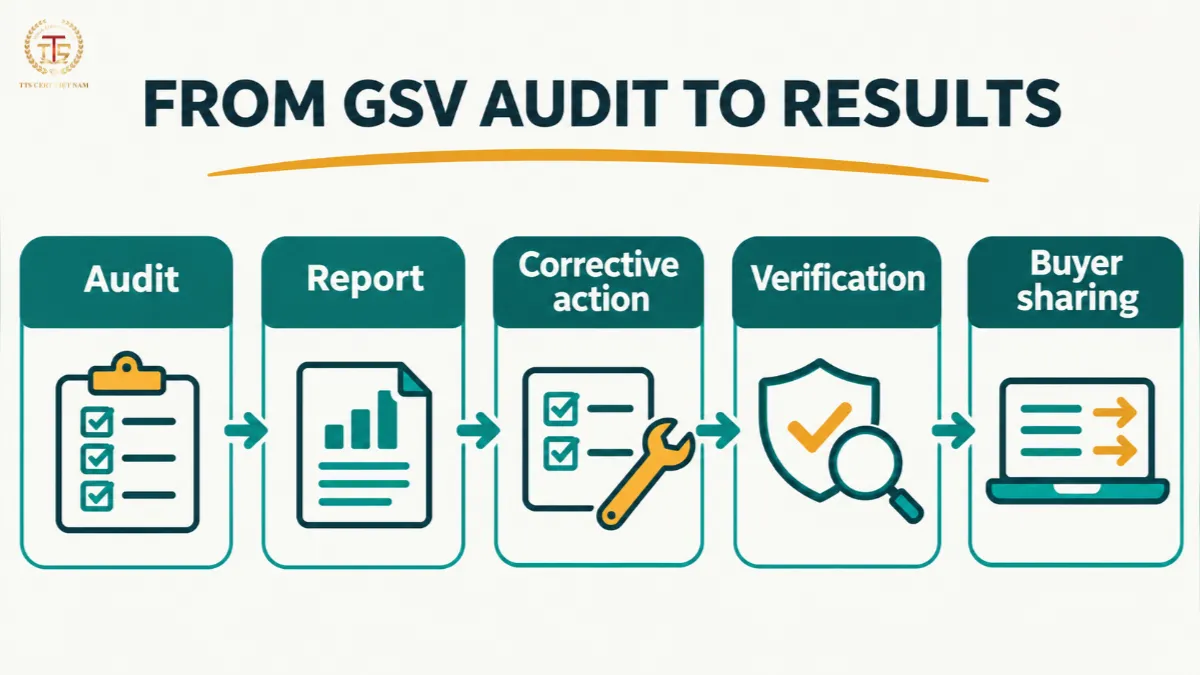
  3. Corrective action: root cause, immediate containment, sustainable corrective measures, ownership, evidence and required submission dates.

  4. Acceptance and use: the buyer's expectations, the permitted sharing route, any due date and whether follow-up or reassessment is needed.

For example, a seal log that does not match the shipping document requires a review of seal custody and reconciliation, not merely rewritten paperwork. A CCTV blind spot at the loading bay needs a control improvement, verification of coverage and evidence of routine monitoring.

Do not adopt a “76-point pass mark”, a one-year ROP validity rule or a universal reassessment cycle from historical forms as current GSV requirements without written programme-specific confirmation from Intertek.

GSV audit outcome workflow from assessment and report to corrective action, verification and buyer sharing

8. Verifying and Sharing GSV Results with Buyers

Intertek operates GSV and is the appropriate programme contact for confirming official results. TTS Cert supports preparation but cannot independently authenticate a purported GSV report or declare that every buyer has accepted it.

A practical verification sequence is:

  • Check the document: match the company, site address, audit date, applicable scope and report reference details to the buyer's request.

  • Confirm with Intertek: contact the programme through the official GSV page or Intertek Vietnam to verify authenticity, status and permitted sharing procedures.

  • Confirm buyer acceptance: ensure the intended recipient has access to the authorised evidence and check whether additional corrective actions or a more recent audit are required.

The public material reviewed does not substantiate a single open, universal “GSV certificate lookup” for all facilities. Avoid using Intertek's unrelated product marks or management-system certificate directories to make conclusions about a GSV audit.

Intertek highlights the potential to share verification results with several importers, but data use, disclosure permissions and buyer-specific acceptance must still be respected. A GSV report does not automatically substitute for a SCAN report, a Walmart SCS-compliant route or a TAPA FSR certificate.

9. GSV Audit Cost, Timeline and Frequency

No one published GSV audit fee can responsibly represent every facility. The quotation will depend on location, audit scope, site complexity, audit time, travel arrangements and Intertek's applicable commercial terms. Separate the official audit fee, TTS Cert consulting fee, and any necessary security infrastructure improvements when budgeting.

Indicative TTS Cert consulting timeline: For facilities with baseline security systems and records, TTS Cert aims to complete consulting, system improvement and audit readiness within up to approximately 30 days. An additional estimated 15 days after the audit may be budgeted for result processing if the facility meets the applicable requirements. This gives an overall planning target of around 45 days where the audit can be scheduled appropriately and significant corrective action is not required. Faster support may be arranged to meet urgent client needs; there is no fixed minimum consulting period.

This is TTS Cert's planning estimate, not Intertek's guaranteed report-release service level and not a promise to receive a “GSV certificate” within 45 days. Audit scheduling, findings, infrastructure work and requests for further evidence may change the actual timeline.

Audit frequency and report validity should be checked against the buyer's current requirements and the programme rules applying to the specific facility. Public historical examples should not be presented as a universal one-year validity period for every current GSV result.

10. GSV vs CTPAT, SCAN, Walmart SCS and TAPA FSR

These arrangements overlap in security topics but differ in programme owner, result format and buyer acceptance.

ProgrammePrimary purposeImportant distinction
GSV – IntertekSupply chain security verification using an Intertek programme framework, reporting and scoringAcceptance depends on buyer needs and the official GSV output; it is not automatically an ISO management-system certificate
CTPAT – U.S. CBPVoluntary trusted-trader security partnership for eligible businessesVietnamese factories are generally assessed against CTPAT criteria at customer request rather than becoming direct CBP members
SCANShared supply chain security assessments and report use among participating importersThe programme has its own reporting and acceptance requirements; it is not interchangeable with GSV
Walmart SCSWalmart's security requirements for relevant suppliers and facilitiesAccepted pathways are conditional; do not assume GSV is automatically accepted
TAPA FSRWarehouse and cargo-facility security certification at Levels A/B/CIts certification scope and assurance route differ from a GSV factory audit

A buyer asking for an audit against CTPAT security criteria may not be asking for the same deliverable as an Intertek GSV report. Suppliers should distinguish that request from the CTPAT factory security framework. Importers participating in a shared assessment network may specify a SCAN security audit, while Walmart suppliers must check the Walmart SCS acceptance routes. Businesses focused on high-value warehouse protection may instead need TAPA FSR certification.

Selection rule: Confirm the exact accepted programme, document type, site address and due date before paying for another audit. Overlapping security controls do not guarantee reciprocal acceptance between schemes.

11. Common GSV Findings and How to Correct Them

The following are practical security-readiness examples, not Intertek statistics on GSV nonconformity frequency.

Potential weaknessWhy it mattersCorrective action and supporting evidence
Missing seal reconciliationCargo integrity cannot be supportedRestrict seal issue, reconcile each shipment and review discrepancies
Container forms completed before an actual inspectionPaper trail does not represent the real processTrain staff to inspect at the right time and document real observations
CCTV blind spots or inaccessible recordingsIncidents around sensitive areas cannot be investigatedReassess camera positions, maintain systems and test retrieval
Uncontrolled visitors or contractorsUnauthorised access to cargo or loading zonesImplement identification, approval, supervision and reliable logs
Shared IT accounts and former-user accessShipping information can be changed or exposedAssign role-based permissions, disable inactive accounts and review access
No risk-based carrier screeningUncontrolled security risks beyond the factorySet partner review criteria and monitor relevant incidents
Risk assessment never refreshedControls become obsolete as business operations changeReview risks when sites, routes, partners or threats change

Effective corrective action starts with the root cause, followed by containment, a sustainable system change, evidence of actual use and effectiveness review. Never backdate or fabricate records to make a factory appear audit-ready.

12. GSV Audit Consulting Services by TTS Cert

TTS Cert supports factories, warehouses and exporters through a practical GSV readiness programme combining gap analysis, implementation support and site-based verification of operating evidence. The goal is a functioning security system that continues to protect cargo after the auditor leaves.

PhaseTTS Cert supportTypical deliverable
1. Scope and gap assessmentClarify buyer requirements, audit boundaries and the 12 GSV categories; review existing controlsPrioritised gap register and readiness plan
2. System implementation and trainingSupport proportionate procedures, container and seal controls, physical access, partner review, cybersecurity and staff awarenessUsable controls, trained responsible personnel and operational records
3. Readiness review and follow-upConduct an internal evidence check, coordinate preparations where appropriate and support corrective-action responsesInternal readiness findings, action plan and handover documents

The indicative consulting target is up to approximately 30 days for facilities with suitable baseline controls, with an accelerated approach possible where the customer needs it and the site is ready. TTS Cert does not replace Intertek as the programme operator, perform Intertek's official scoring or issue GSV reports, participation records or guarantees of buyer acceptance.

Frequently asked questions

Is GSV mandatory for all Vietnamese exporters? No. It is usually driven by buyer requirements or voluntary supply chain risk management.

Is GSV the same as CTPAT certification? No. GSV is an Intertek verification programme; CTPAT is operated by U.S. Customs and Border Protection with separate membership rules.

Can my factory perform its own GSV audit? It can conduct an internal readiness review, but an official GSV assessment and programme output must follow Intertek's authorised process.

What score qualifies for a GSV certificate? Confirm the current eligibility and result format directly with Intertek rather than relying on old online scoring thresholds.

Can one GSV report be shared with several buyers? Intertek promotes shared verification benefits, subject to programme data permissions and each buyer's acceptance requirements.

Can consulting finish faster than 30 days? Potentially, depending on facility readiness and urgency. Thirty days is a planning maximum target for the consulting phase in suitable cases, not a mandatory minimum; official audit and reporting schedules remain independent.

STANDARDS · INITIATIVES · INDUSTRY NETWORKS

Supporting businesses through standards and industry initiatives

SMETA
BSCI
Better Cotton Initiative
Social & Labor Convergence Program
Responsible Jewellery Council
Higg FEM
FSC
Global Recycled Standard
ISO 14064-1 Carbon Footprint Verified
CTPAT
100% Recycled Plastic