Environment & Carbon

What Is the Higg Index? Sustainability Measurement Tools for Factories and Brands

The Higg Index is a suite of five tools for measuring environmental and social impact in apparel, footwear and consumer goods. This article explains each tool, the roles of Cascale and Worldly, which tools factories need, and how self-assessment and verification work.

The Higg Index is a suite of tools for measuring environmental and social impact in apparel, footwear, textiles and consumer goods. It has five modules: two for facilities (environmental, and social and labor), one for brands, and two for materials and products.

The Higg Index is not a certification. Companies self-assess on the Worldly platform, have the result verified by a third party when customers require it, and share it with customers. For factories in Vietnam, the two tools they meet most often are Higg FEM and Higg FSLM.

1. What Is the Higg Index?

The Higg Index gives everyone in the supply chain a shared way of measuring: the same questions, the same definitions, the same calculations. A factory completes an assessment once and shares it with many customers, rather than answering a different questionnaire for each.

The suite was launched in 2012, originally developed by the Sustainable Apparel Coalition (SAC). In 2023, the SAC was renamed Cascale.

Three points to understand from the start:

  • Self-assessment is the starting point. The data is reported by the company itself on the platform.

  • Verification is the check. A verifier body approved by Cascale checks the self-assessment data on site.

  • The result is a score and data, not a pass/fail certificate.

2. Who Owns and Runs the Higg Index?

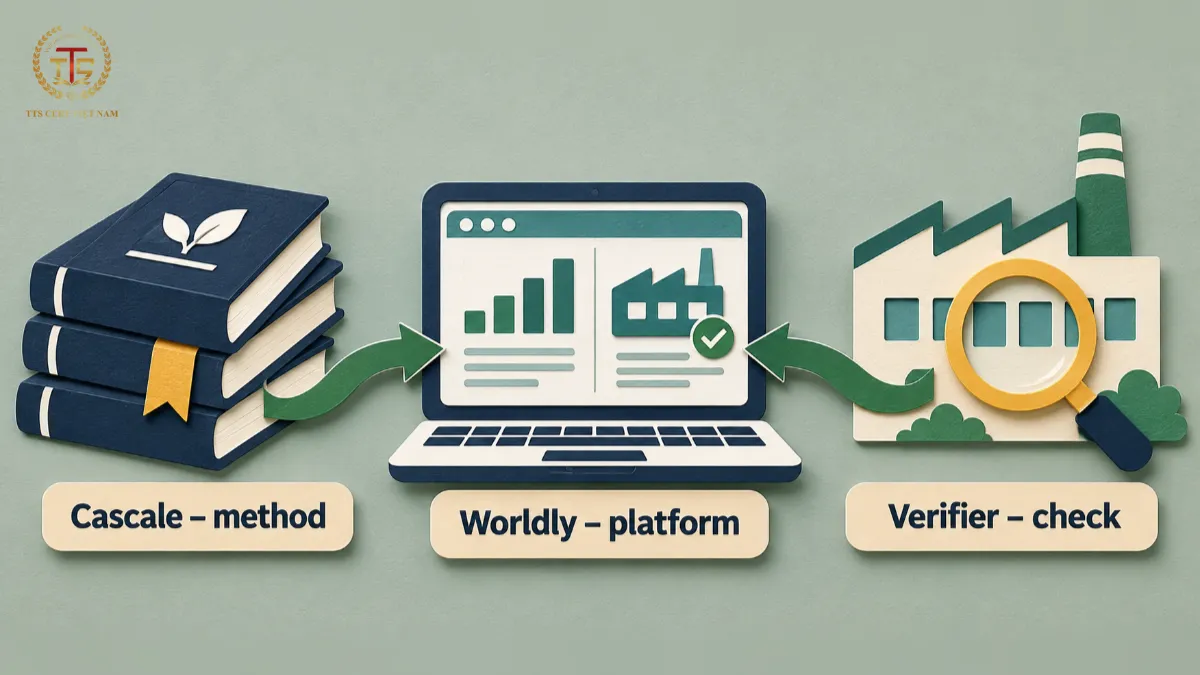
Layered paper-cut illustration: Cascale builds the method, Worldly runs the platform, verifier bodies check data at the factory
PartyRole
Cascale (formerly the Sustainable Apparel Coalition)Owns and develops the Higg Index methodology: questions, scoring and verification rules
Worldly (formerly Higg Co.)A technology company separate from Cascale and the exclusive licensee of the Higg Index. Modules are purchased, completed, posted and shared on Worldly
Verifier bodies (VBs)Approved by Cascale; their verifiers check self-assessment data on site

You do not need to be a Cascale member to use the Higg Index; a Worldly account is enough. Cascale members get additional community, training and tool-development opportunities.

3. The Five Higg Index Tools

ToolUsed byMeasuresVerified?
Higg FEM (Facility Environmental Module)Factories, mills, production sitesEnvironmental management system, energy and GHG emissions, water, wastewater, air emissions, waste, chemicalsYes (vFEM)
Higg FSLM (Facility Social & Labor Module)Factories, production sitesRecruitment, working hours, wages, health and safety, treatment, labor managementYes (vFSLM, using the SLCP methodology)
Higg BRM (Brand & Retail Module)Brands, retailersCorporate sustainability management, supply chain, product, packagingYes
Higg MSI (Materials Sustainability Index)Designers, material developersCradle-to-gate environmental impact of materialsNo on-site verification
Higg PM (Product Module)Product developersProduct life-cycle environmental footprintNo on-site verification

Higg FEM

Assesses the environmental performance of a production facility on an annual cycle. It is the tool Vietnamese factories are asked for most often. Higg FEM 2026 was launched on 5 November 2026 with a new modular structure. See What Is Higg FEM? and Higg FEM 2026: what's new and the timeline.

Higg FSLM

Assesses social and labor conditions at a facility. Higg FSLM is built on the Converged Assessment Framework (CAF) of the Social & Labor Convergence Program (SLCP), and FSLM verification follows the SLCP verification methodology. Factories that have completed SLCP verification usually do not have to start from scratch when a customer asks for FSLM.

Higg BRM

Lets brands and retailers assess how they manage sustainability at company level and across their supply chain. Factories do not complete the BRM, but their FEM and FSLM data often feeds into their customers' BRM.

Higg MSI and Higg PM

Two material and product tools based on life cycle assessment (LCA). Design and product development teams use them to compare the impacts of material and process choices. Factories usually take part only by supplying production data to customers.

4. Which Tools Does Your Factory Need?

Type of companyTools usually requested
Garment and footwear factories (finished goods)Higg FEM; Higg FSLM if customers request social assessment through Higg
Textile mills, dye houses, finishing plants, tanneriesHigg FEM, especially the wastewater and chemicals sections; Higg FSLM if requested
Trim, packaging and material suppliersHigg FEM when brands extend requirements down the supply chain
Brand and retailer officesHigg BRM
Design and material development teamsHigg MSI, Higg PM

Three points to keep in mind:

  • Confirm each customer's requirements: self-assessment only or verification, deadlines, expected score. These are set by the customer, not by Cascale.

  • One facility completes one FEM module per cycle and shares it with all customers. You do not complete one per customer.

  • Higg FEM 2026 adds an FEP module (Foundational Environmental Performance) within its new modular structure. Check which module your customers require before purchasing.

5. How Does the Higg Index Work?

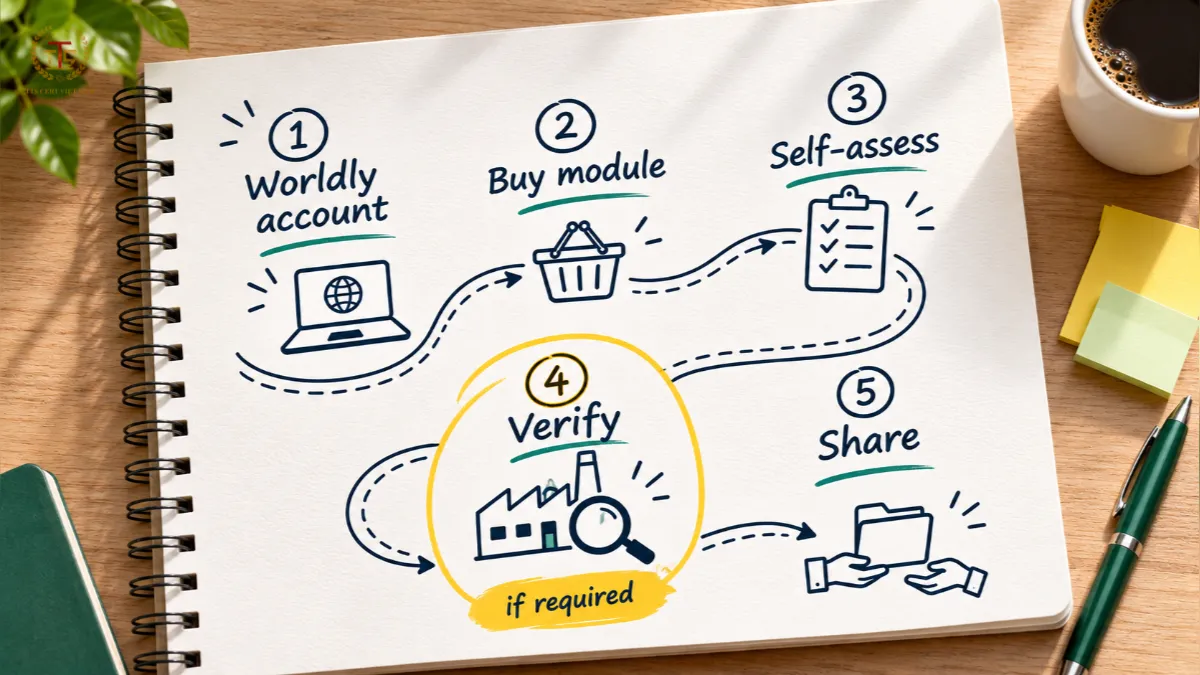
Hand-drawn notebook page showing five Higg steps: Worldly account, buy module, self-assess, verify, share

For factories, the general process for Higg FEM and Higg FSLM has five steps:

  1. Create a facility account on Worldly and enter general information: location, facility type, products, processes.

  2. Purchase the module for the cycle you need. For FEM, there is a new cycle every year.

  3. Self-assess: answer the questions, enter data, upload evidence, then post the self-assessment.

  4. Verification (if customers require it): choose a Cascale-approved verifier body; the verifier checks the facility on site and updates the result on Worldly.

  5. Share the posted or verified module with customers on Worldly.

Higg FEM follows a fixed annual schedule. Higg FSLM runs on a rolling cycle with no common annual deadline. For the Higg FEM 2026 timeline, see our Higg FEM 2026 article.

6. Is the Higg Index a Certification? Scores and Limitations

No. The Higg Index does not issue certificates, has no pass/fail result and no common minimum score. The result is a score and detailed data for each section.

  • Scores are for comparison and improvement. In Higg FEM, scores are structured by Level 1, 2 and 3 within each section. See how Higg FEM is scored.

  • The "passing" score is set by customers. The same score may satisfy one customer but not another.

  • Self-reported data needs verification. That is why many brands accept only verified modules.

  • Communicate with care. Cascale has guidelines on how Higg results may be communicated. In 2022, the use of Higg MSI data on consumer-facing product labels was challenged by the Norwegian Consumer Authority, and the consumer-facing transparency programme was paused. The lesson for companies: use Higg results for improvement and customer dialogue, not as a "green label" in advertising.

A common misunderstanding is "the factory is Higg certified". The accurate phrasing is that the factory has completed and verified the Higg FEM module for a given cycle, with a given score.

7. How Does the Higg Index Relate to ESG and Other Programmes?

  • ESG and European customer requirements: Cascale reports that EFRAG has recognised Higg FEM as a valuable, credible sustainability reporting tool for SMEs, aligned with EU frameworks. Higg FEM data can be reused when you work on ESG.

  • ZDHC: the chemicals and wastewater sections of Higg FEM reference ZDHC requirements.

  • SLCP: Higg FSLM uses the SLCP questionnaire and verification methodology.

  • ISO 14001, ISO 14064-1: an environmental management system and GHG inventory data help answer many FEM questions. See GHG inventories under ISO 14064-1.

8. How TTS Cert Supports Your Higg Work

TTS Cert provides Higg FEM consulting:

  1. Identifying each customer's requirements and the modules needed.

  2. Guidance on creating the account, setting up the facility profile and purchasing modules on Worldly.

  3. Reviewing data: energy, GHG emissions, water, wastewater, air emissions, waste, chemicals.

  4. Support with answering questions, preparing evidence and posting the self-assessment.

  5. Pre-verification review, explanations and corrective actions after verification.

  6. An improvement plan to raise scores in the next cycle.

TTS Cert works with reputable domestic and international certification bodies, connecting businesses with professional audit and certification services to help them:

  • Complete Higg FEM verification as required by brands.

  • Strengthen brand reputation, image and competitiveness.

  • Access promising export markets.

  • Meet customer and global supply chain requirements.

See our service details in What Is Higg FEM?

9. Frequently Asked Questions

Is the Higg Index mandatory? Not by law. It is voluntary, but many apparel and footwear brands include Higg FEM or Higg FSLM in their supplier requirements.

Do we need to be a Cascale member to use the Higg Index? No. A Worldly account is enough to purchase and complete modules.

How is the Higg Index different from Higg FEM? The Higg Index is the name of the whole five-tool suite. Higg FEM is one of those tools, for facility-level environmental assessment.

Are Higg FSLM and SLCP the same thing? Not exactly. Higg FSLM uses the SLCP CAF questionnaire and verification methodology, but it is a Higg Index module on Worldly with additional Cascale scoring.

Is there a "Higg certificate"? No. The Higg Index does not issue certificates. The result is a posted or verified module with a score, shared with customers on Worldly.

What fees are involved? Typically: the module fee on Worldly; the verification fee quoted by the verifier body; the Higg FEM Verification Access Fee of USD 350 set by Cascale (from 1 January 2026); and consulting fees if you use a consultant. Exact amounts are published by each party.

How often is Higg FEM completed? Once per annual cycle. Factories complete the module for the previous year's data, following Cascale's published schedule.

10. Conclusion

The Higg Index is a shared language for factories, brands and retailers to measure and discuss environmental and social performance. For Vietnamese factories, the usual task is Higg FEM, plus Higg FSLM if customers ask for it. Complete it on Worldly, verify when required, and use the results for real improvement rather than just compliance. With Higg FEM 2026 just launched, now is a good time to review your data and prepare for the early-2027 assessment season.
Expert Tăng Mộng Điệp - Higg FEM, ESG and Sustainable Development
AuthorExpert Tăng Mộng ĐiệpHigg FEM Expert | ESG and Sustainable Development

Expert Tang Mong Diep has more than 15 years of experience in environmental management, ESG and sustainable development, with particular expertise in the Higg Facility Environmental Module (Higg FEM).

SEE MORE

STANDARDS · INITIATIVES · INDUSTRY NETWORKS

Supporting businesses through standards and industry initiatives

SMETA
BSCI
Better Cotton Initiative
Social & Labor Convergence Program
Responsible Jewellery Council
Higg FEM
FSC
Global Recycled Standard
ISO 14064-1 Carbon Footprint Verified
CTPAT
100% Recycled Plastic